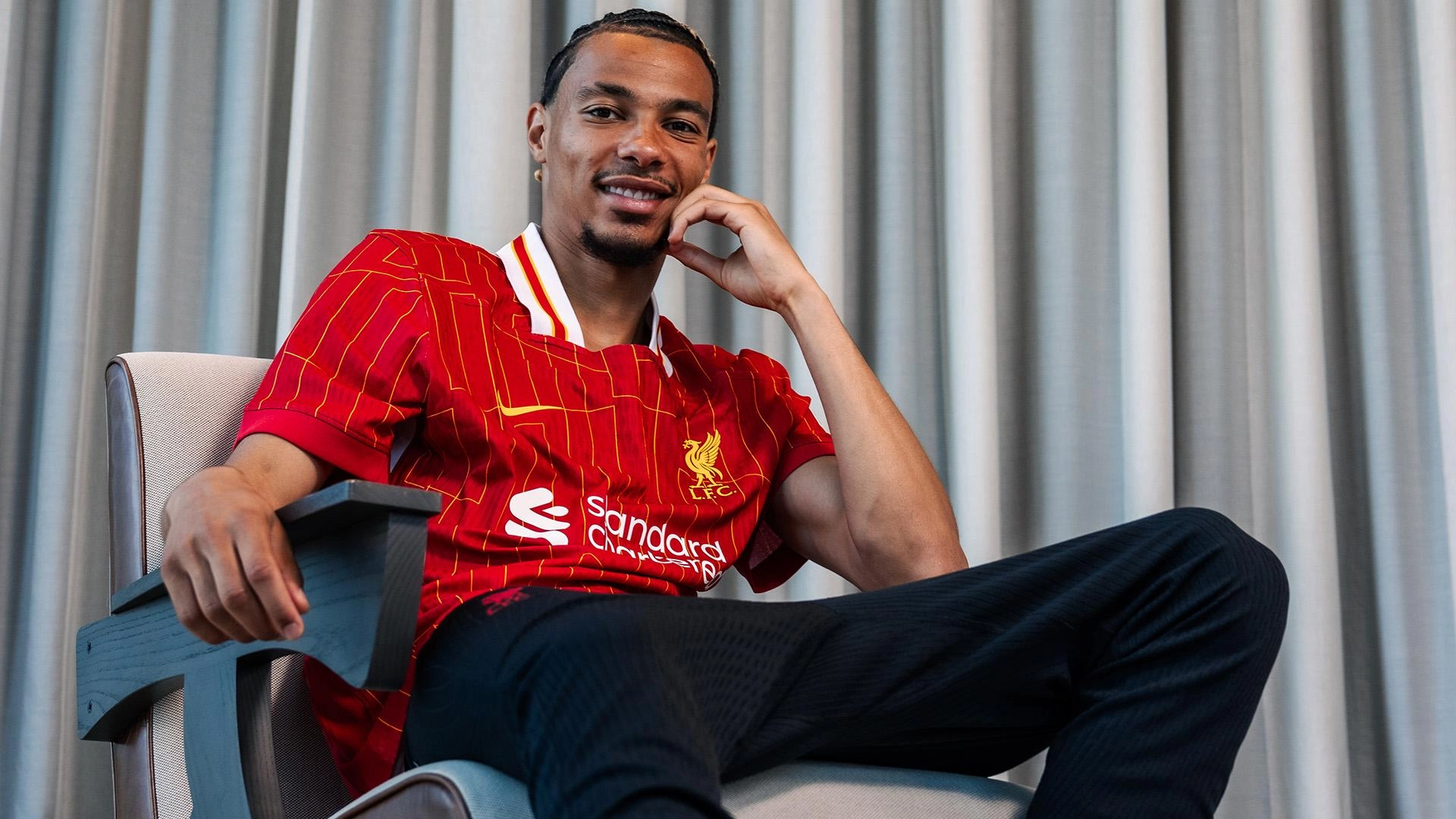
Hugo Ekitike may now wear the colours of one of football’s most famous clubs, but the Liverpool striker insists that visibility does not have to come with intrusion. Despite his rising profile at Anfield, the 23-year-old has made it clear that while he accepts the fame that comes with elite football, he has no intention of allowing public attention to consume his private life.
In a recent interview with BBC Sport, Ekitike reflected on his journey from an uncertain teenage prospect to a player now considered part of Liverpool’s long-term plans. His words revealed a footballer shaped as much by setbacks as by success, and one who remains acutely aware of how fragile a career in the modern game can be.
Ekitike traced the true turning point of his development back to the age of 14, during his time at the Reims academy. Far from being a standout talent, he admitted he was close to being released. “I was bad. I was really bad,” he said candidly. “I was the kind of player who dreamed too much on the pitch. I had quality, but I wasn’t focused.”
That lack of discipline nearly cost him his place in the academy. A meeting with coaches and parents delivered a stark warning: improve or leave. It was a moment that forced Ekitike to confront reality early. From that point on, he began to reshape his mentality, learning that raw ability alone would never be enough.
His professional journey since then has been anything but conventional. After making his breakthrough with Reims, Ekitike moved abroad to Denmark with Vejle Boldklub, an experience that exposed him to a different football culture and helped accelerate his maturity. From there, opportunities arrived quickly. A loan move to Paris Saint-Germain placed him among global stars, while later spells across Europe continued to test his adaptability.
)
By the age of 23, Ekitike had already played professional football in four different countries and amassed more than 140 senior appearances. Each move, he says, reinforced the same lesson: momentum in football can disappear just as quickly as it arrives.
“I know football is just moments,” Ekitike explained. “You can be at the top and then go down straight away. That’s why I always try to be ready, to work hard, to improve myself every day.”
His arrival at Liverpool this summer marked the biggest step of his career. Moving to a club with global reach and relentless scrutiny could easily overwhelm a young player, yet Ekitike appears unfazed. He has settled quickly, earning the trust of supporters with energetic performances and a willingness to contribute selflessly.
The only blemish so far has been a red card in a recent match, a mistake he acknowledged but did not allow to define him. Those close to the club believe his response to that setback — calm, reflective, and focused — has further strengthened his standing within the squad.
Despite his growing status, Ekitike remains deeply private. He openly acknowledges that playing for Liverpool has made him far more visible, but he draws a clear line between his professional and personal worlds.
“I know it comes with being a football player at Liverpool — you are more famous,” he said. “But my private life, I don’t want people to know. I like to be famous but unknown.”

That mindset reflects the influence of those who guided him early in life. Ekitike singled out his first coach, Rodolf, as a pivotal figure. Rodolf introduced him to organised football when Ekitike was still a child, often staying in a care centre while his mother worked. Though they no longer speak regularly, the striker has never forgotten that support.
“When I go home one day, I will go to say hi,” he said. “I remember him.”
Such reflections reveal a player grounded by memory and gratitude, even as his career accelerates. Within Liverpool, Ekitike is increasingly viewed as a forward capable of growing into a central role over the coming seasons. His versatility, work rate, and willingness to learn have impressed coaches, while his humility has resonated with teammates.
For Liverpool supporters, Ekitike represents both promise and patience — a player still developing, but with the mindset to handle the pressures of elite football. For Ekitike himself, the objective remains simple: help the team succeed, stay mentally balanced, and avoid being consumed by the noise that surrounds the modern game.
As his profile continues to rise, that balance will be tested. Yet if his journey so far is any indication, Ekitike is well aware of how quickly fortunes can change — and how important it is to stay focused on the work rather than the spotlight.
He may like being “famous but unknown,” but at Liverpool, Hugo Ekitike is quietly becoming impossible to ignore.