“I’M STILL DOING WHAT I WAS BORN TO DO…” — Prince Harry’S CLAIM SPARKS OUTRAGE AS ROYAL TENSIONS RISE
Prince Harry has once again ignited debate after insisting that he still sees himself as a “working royal,” despite formally stepping back from official duties in 2020. Speaking during his recent visit to Ukraine, the Duke of Sussex emphasized that he continues to carry out the work he was “born to do,” particularly through humanitarian trips and public advocacy. However, this statement has been met with strong resistance from critics who argue that his position no longer aligns with the responsibilities or authority of an active member of the Royal Family.
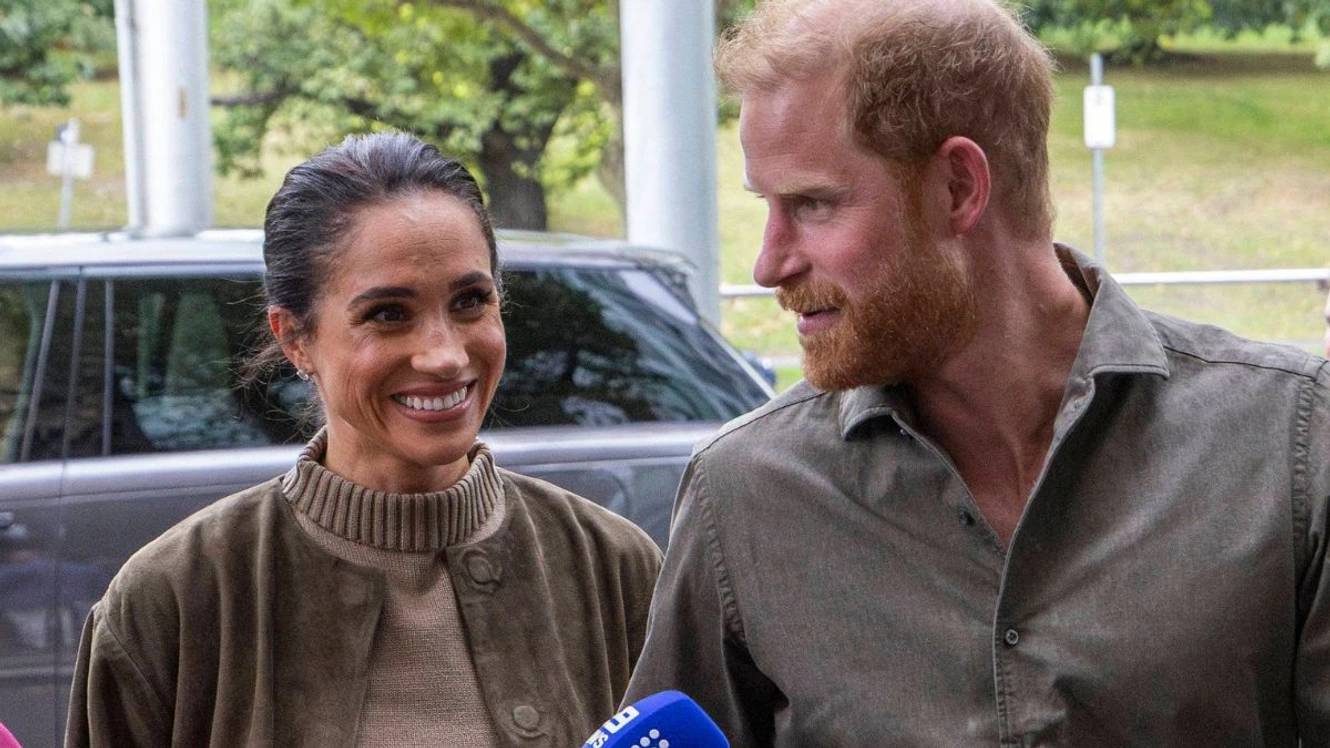
The reaction from the public has been swift and, in many cases, unforgiving. Many royal watchers pointed out that the definition of a “working royal” is not subjective. It involves representing the monarch, carrying out official engagements on behalf of the Crown, and adhering to strict protocols. Since Harry and Meghan chose to step away from those duties, critics argue that reclaiming the label without the obligations appears inconsistent.

During the Ukraine visit, Harry highlighted the importance of maintaining global attention on humanitarian crises, presenting himself as a figure committed to service. Meghan, as observers noted, has continued to stand alongside him in these international appearances, reinforcing the image of a couple still operating in a quasi-royal capacity. Their presence at events, their messaging, and their overall presentation have led some to question whether they are intentionally recreating the optics of official royal engagements.

A royal commentator remarked that “it’s not just what they say—it’s how they present themselves.” This sentiment reflects a broader concern that Harry and Meghan may be attempting to maintain the influence and recognition associated with royal life while operating outside its formal structure. For many critics, this creates confusion about where their authority begins and ends.
The roots of this tension can be traced back to the couple’s original departure from royal duties. At the time, Harry and Meghan proposed a “part in, part out” arrangement, in which they would retain some royal roles while pursuing financial independence. That proposal was ultimately rejected by Buckingham Palace, which insisted on a clear separation between official duties and private life. The current situation, some observers suggest, resembles an unofficial version of that original plan.
This has fueled speculation about the couple’s motivations. One theory circulating among commentators is that Harry and Meghan are gradually reasserting themselves in a semi-royal role, hoping that consistent public engagement will eventually force the Palace to acknowledge their contributions. While there is no confirmation of such a strategy, the pattern of high-profile appearances and carefully framed messaging has not gone unnoticed.
At the same time, there are suggestions that practical considerations may also be at play. Maintaining a global public profile, funding large-scale philanthropic initiatives, and sustaining a certain lifestyle all require significant resources. Some critics believe that reestablishing a closer association with the Royal Family could offer both symbolic and practical advantages. One reader commented, “It feels like they want the influence back without the restrictions—and maybe the security that comes with it.”
Supporters, however, see the situation differently. They argue that Harry and Meghan have every right to define their own path and that their continued commitment to humanitarian work demonstrates genuine intent. From this perspective, the label of “working royal” is less about formal titles and more about the spirit of service. A supporter noted online that “if he’s doing the work, why does the label matter so much?”
Despite these differing views, the Palace has remained largely silent, maintaining its established position that Harry and Meghan are no longer working members of the Royal Family. This silence, while consistent with royal protocol, leaves room for ongoing interpretation and debate.
What makes this situation particularly complex is the emotional and symbolic weight attached to royal identity. For Harry, being part of the Royal Family is not simply a professional role—it is a lifelong identity. His insistence that he will “always be part of the Royal Family” reflects that reality. However, the public distinction between being a member of the family and being a working representative of the institution remains a crucial one.
As the discussion continues, it becomes clear that the issue is not just about titles or definitions. It is about expectations, boundaries, and the evolving nature of monarchy in a modern world. Harry and Meghan’s attempt to navigate these boundaries—whether intentional or not—has placed them in a uniquely challenging position, one that continues to draw both criticism and support in equal measure.
Ultimately, the question remains unresolved: can someone step away from the institution yet still claim its role in practice? Until that question is answered definitively, every statement, appearance, and claim made by the Duke and Duchess of Sussex will continue to be examined through a lens of skepticism and debate.