In the shadow of an outbreak of hostilities in Iran, the safety and future of the controversial Australian women and children detained in Syria has been thrown into greater uncertainty.
Sydney GP Dr Jamal Rifi – an Order of Australia recipient and prominent Muslim community leader – has been working to repatriate 11 women and 23 children from the Al-Roj detention camp in northeast Syria.
Their attempted exit last month collapsed at the last minute, with the convoy turned back just 50 kilometres from the camp.
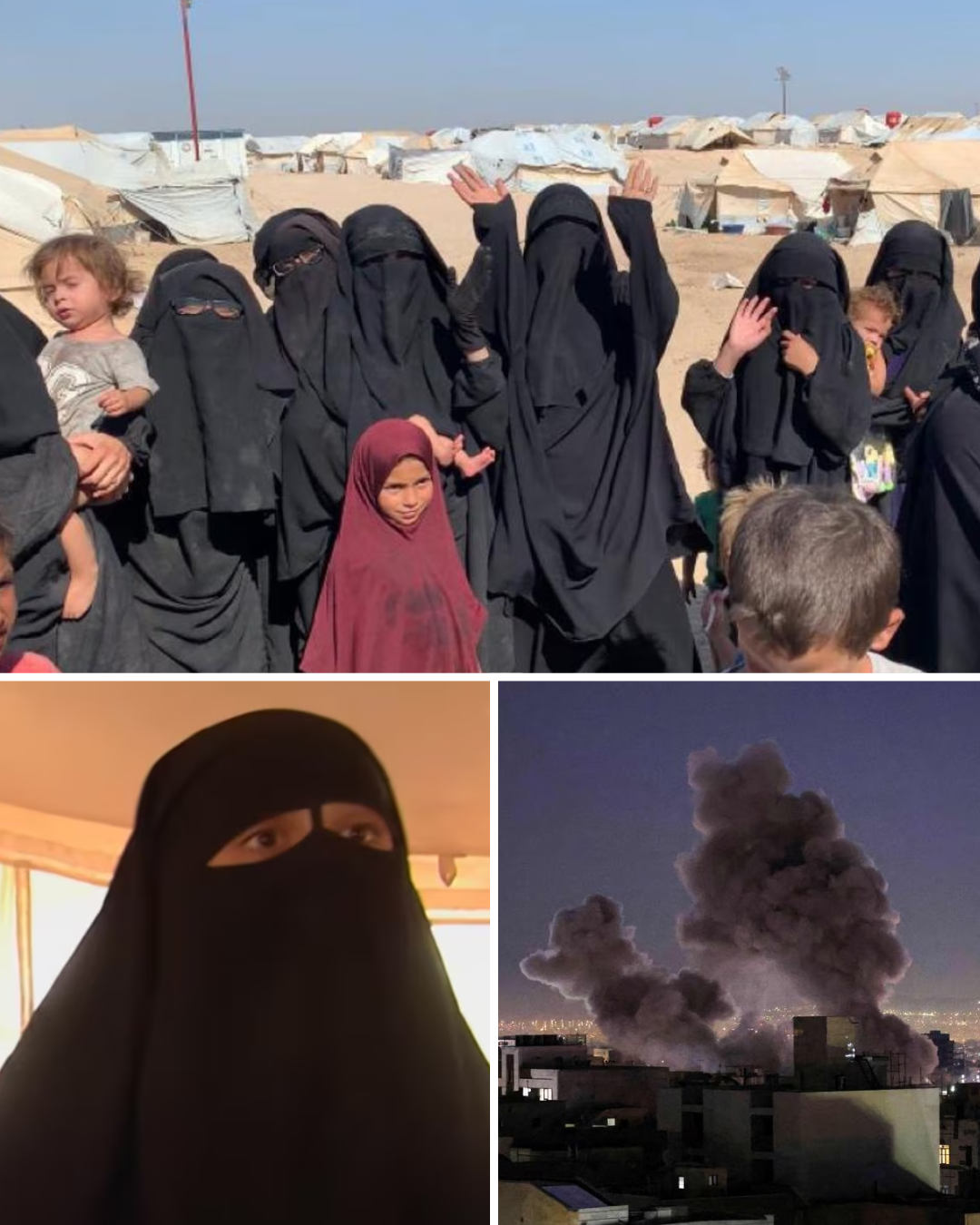
Australian women and children in northeast Syria. Picture: Supplied
Now, with the outbreak of war in the region and amid rising political backlash at home, Dr Rifi told news.com.au from his hometown of Tripoli in northern Lebanon that efforts are effectively on hold.

“Look, to be honest, nothing in the sense that I’m not doing anything with (repatriation efforts). They’re still in the camp in Syria, and we just have to wait and see,” he said.
Asked if the war would impact any future extraction, he added:
“I have no idea, to be honest.
“The situation is very fluid, but I’m not actually doing anything in terms of repatriations right now, because it’s not safe for them to be outside (the camp).”
Zahra Ahmad told SBS ‘we are left to suffer with our kids’. Picture: ABC Four Corners
The group – 34 Australian citizens in total – have been in the Kurdish-run camp since 2019. Human rights organisations have repeatedly described conditions as dire and the picture Dr Rifi paints is bleak.

“They’re on the edge of the desert. During the winter it’s extremely cold. During the summer, it’s extremely hot, and there are no greeneries, nothing whatsoever. It’s just dust and wind,” he said.
“They are living in a tarpaulin tent. And those kids there are sleeping on the floor.
“It’s a horrendous situation.”
He estimates the children are now between six and 13 years old – many having spent most of their lives inside the camp.
His contact to those inside the camp has been isolated messages via smuggled phones.
“I couldn’t even speak to them like I’m speaking to you,” he said.
“I don’t know these women. Now, (if) I saw them on the street, I couldn’t pick them out of a line-up.
“They may go for a while without any messages, because they can’t use them, or there are pressures on them, because they’re not in a refugee camp. No, they are in a detention camp.”
Dr Rifi said his communication with them was mainly through messages and mainly to do with medical issues.
“Panic attacks in the kids, chilblains, recurrent tonsillitis, asthma, sunstrokes, medical issues,” he said.
“I didn’t deal with anything about their mentality, radicalisation, or what is their political view or ideology. I dealt with medical issues.”
Smoke plumes rise following missile strikes in Tehran on March 1. Picture: Atta Kenare/ AFP
The saga has ignited fierce political debate domestically. Prime Minister Anthony Albanese has said he has “nothing but contempt” for women who took their children into Islamic State territory and has ruled out government-facilitated repatriation.

Home Affairs Minister Tony Burke has insisted the government is not involved in Dr Rifi’s private efforts.
Dr Rifi said he made the recent trip in order to clear his name in his native Lebanon, where he was sentenced in absentia in 2021 to 10 years in jail with hard labour.
At the 2021 secret hearing, the military court alleged that his involvement with Rozana, a cross-faith health organisation chaired by Melbourne businessman Ron Finkel, and a 2017 visit to Palestinian hospitals had breached Lebanon’s decades-old boycott law.
The charges stemmed from Dr Rifi’s humanitarian work, which provided medical training and equipment to hospitals in Gaza and the West Bank.
He was ultimately acquitted and fined the equivalent of about $A530 for entering “enemy territory” without a permit.
Jamal Rifi with his brother, former Lebanese justice minister Ashraf Rifi and two nephews, in Tripoli. Picture: Supplied
“It’s nice to be in my hometown,” he said. “It’s nice to be back next to my brother and to my sisters. I spent last night at my sister’s place and we’re just doing quite well.

“I’m fasting the month of Ramadan here, doing my prayers attending the mosque and spending the night with friends, and that’s mainly it, not doing much at all.”
A legal firm worked pro bono to secure renewed passports and citizenship by descent for the children of those in the camp, with Dr Rifi personally covering some of the costs.
He also earlier confirmed he carried a 35th passport – for Yusuf Zahab, a young man taken to Syria as a child who is now believed to be in Iraq.
Dr Rifi took aim at media coverage in Australia which argued he ought not to advocate for those who he did not know.
“They are Australian kids. They stayed there for six years, enough time has passed to bring them to Australia…
“All the security experts are saying it is safer for them to be in Australia and monitored by all security agencies, rather than left there where nobody can monitor them.”
News
ROYAL FREEZE EXPOSED: THE ‘LAST TIME’ PRINCE HARRY AND KING CHARLES SPOKE REVEALS SHOCKING TRUTH!
‘Last time’ Prince Harry and King Charles spoke as true state of relationship exposed Prince Harry and King Charles have not seen each other face-to-face since September. King Charles and Prince Harry have not spoken in nine months, the author…
Princess Beatrice’s husband has finally addressed the backlash over his frequent time away — but instead of a full explanation, he offered a cryptic four-word remark
Princess Beatrice’s husband breaks silence on absence with brutal four-word comment Princess Beatrice’s husband has spoken out after criticism over his frequent trips away from his family. Princess Beatrice pictured with Edoardo last week (Image: GETTY) Princess Beatrice’s husband has broken…
ROYAL STEPS: PRINCE GEORGE EMULATES KING CHARLES IN HEARTWARMING MOMENT
Prince George follows in granddad King Charles’ footsteps with the ‘Windsor walk’ Prince George and King Charles reportedly share a close relationship, with the elder royal acting as a mentor to his grandson rince George is following in the footsteps of…
Princess Kate was seen shooting a sharp glare at anti-monarchist protesters after they began booing during the Trooping the Colour parade — with Prince George, Princess Charlotte and Prince Louis by her side
MA’AMA BEAR Moment Princess Kate glares at anti-monarchist protesters as they boo her and the kids at Trooping parade THIS is the moment Princess Kate glared at anti-monarchists as they booed her and her kids during Trooping the Colour. Members…
The ever-poised Catherine, Princess of Wales brought an unexpected burst of warmth and laughter as she led senior royals at this year’s Order of the Garter ceremony — marking its first full staging since Prince Andrew was stripped of his honorary roles
REGAL DISPLAY Giggling Princess Kate leads royals at first Order of the Garter ceremony since Andrew stripped of title THE Royals have held their first Order of the Garter at Windsor Castle since disgraced Andrew was stripped of the honour….
Prince George had a relatable moment during Trooping the Colour as he tried his best to hold in a sneeze while the national anthem played
Prince George struggles to contain sneeze during national anthem at Trooping the Colour The young future King valiantly fought off the need to sneeze for some time before succumbing as the national anthem concluded Prince George struggled to contain a…
End of content
No more pages to load