NETFLIX JUST DROPPED A PERIOD DRAMA THAT HITS WHERE IT HURTS MOST
Set after the scars of war, this haunting Netflix film doesn’t shout — it devastates quietly. Olivia Colman and Colin Firth deliver performances so restrained, every unspoken look feels heavier than words. It’s about love that survived war but not time… and the kind of regret that never fades. Slow, beautiful, and emotionally brutal — this one sneaks up on you and stays long after the credits roll.
The film in question is Mothering Sunday (also known as Mothering Sunday), the 2021 British period drama now making waves on Netflix in various regions. Directed by Eva Husson and adapted by Alice Birch from Graham Swift’s acclaimed novella, the movie has resurfaced strongly in late 2025 and early 2026, with viral posts and renewed viewer reactions describing it as a quiet gut-punch of emotion. Though originally released theatrically in 2021–2022, its arrival or re-promotion on Netflix has sparked fresh buzz, with many calling it one of the most understated yet devastating love stories in recent years.
The Story: A Day That Echoes Through Decades
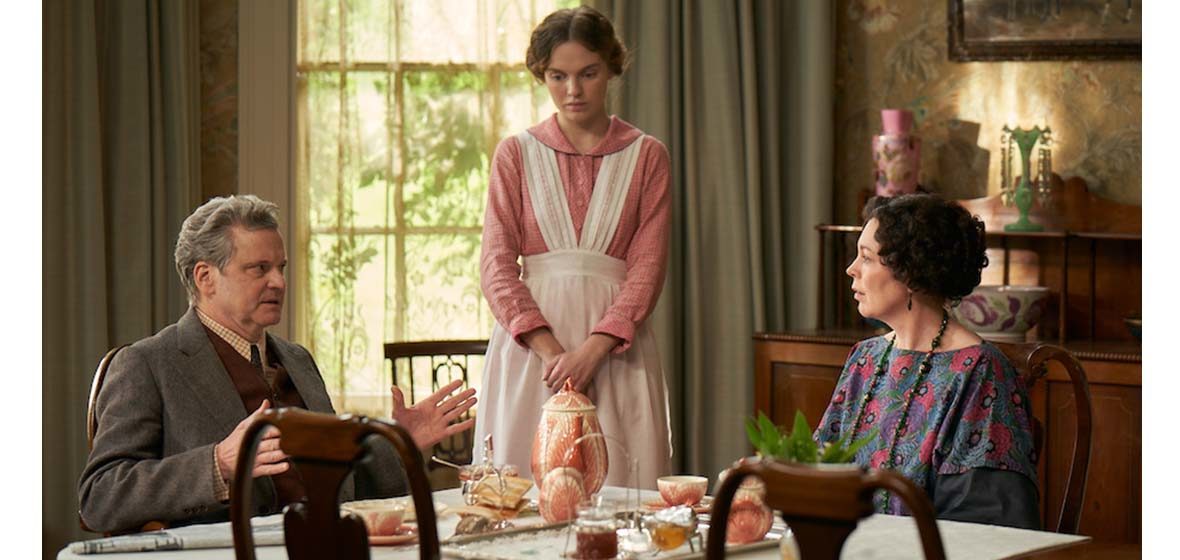
The film unfolds primarily on Mothering Sunday in 1924, a decade after the devastation of World War I. The war’s shadow looms large: entire generations of young men lost, families shattered, and survivors left grappling with grief that society politely ignores. At the center is Jane Fairchild (Odessa Young), a young housemaid and orphan raised in service since childhood. On this rare day off—while her employers, the grieving Mr. and Mrs. Niven (Colin Firth and Olivia Colman), attend a luncheon—Jane embarks on a secret, passionate rendezvous with Paul Sheringham (Josh O’Connor), the privileged son of a neighboring family.
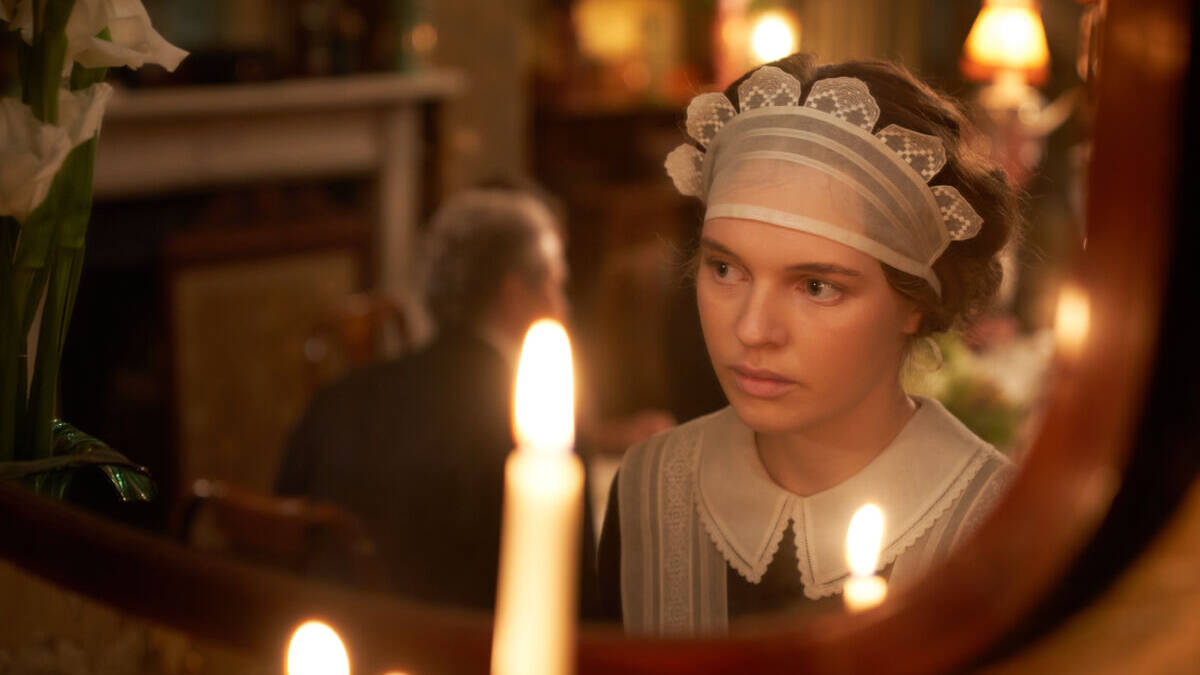
What begins as an intimate, erotic escape becomes something far deeper. The lovers know this may be their final meeting—Paul is soon to announce his engagement to a “suitable” woman from his class. Their day together is charged with urgency, tenderness, and the unspoken knowledge that their love is impossible in the rigid social hierarchy of post-war England. Jane, self-possessed and observant, savors every moment, while Paul wrestles with duty and desire.
The narrative flashes forward and backward, revealing how this single day reverberates through Jane’s life. Years later, she becomes a writer, her experiences shaping her words and worldview. The film explores class divides, the lingering trauma of war, the pain of lost loved ones, and the quiet endurance of those left behind. Regret, unspoken love, and the passage of time are woven throughout—love may have survived the trenches, but it cannot always survive the slow erosion of years, expectations, and silence.
Colman and Firth, in supporting but pivotal roles as the Nivens, embody the quiet devastation of bereavement. Mrs. Niven (Colman) is brittle, sharp-tongued, and profoundly wounded—her grief manifests in biting remarks and moments of raw vulnerability. Mr. Niven (Firth) is gentle, polite to a fault, yet hollowed out by loss, flinching at every reminder of what was taken. Their scenes together are masterclasses in restraint: a glance, a flinch, a failed attempt at connection says everything dialogue cannot.
Performances That Linger: Restraint as Devastation

Olivia Colman and Colin Firth are widely praised for their understated work here. Colman, an Oscar winner known for her emotional depth (The Favourite, The Crown), brings heartbreaking fragility to Mrs. Niven. Her performance is subtle—eyes that betray pain, a voice that cracks just enough—making the character’s grief feel achingly real. Firth, equally acclaimed (The King’s Speech), portrays a man trying desperately to hold things together through manners and generosity, yet crumbling inside. Their chemistry is not romantic but deeply human: two people broken by the same war, unable to fully reach each other.
The leads—Odessa Young and Josh O’Connor—carry the film’s emotional weight. Young’s Jane is intelligent, resilient, and quietly revolutionary in her self-awareness. O’Connor’s Paul is charming yet trapped, his passion clashing with societal duty. Together, their scenes are intimate, sensual, and tragic—never melodramatic, always authentic.
Critics and viewers alike highlight how the film “sneaks up on you.” It avoids big speeches or overt tragedy, letting silence, landscape, and small gestures do the heavy lifting. The cinematography (by Jamie D. Ramsay) captures the English countryside in soft, golden light, contrasting the inner turmoil. The score and sound design amplify the quiet devastation—every rustle, breath, or distant bird call feels loaded.
Why It Resonates Now: A Timeless Ache
Mothering Sunday premiered at Sundance and received strong reviews (77% on Rotten Tomatoes), with praise for its emotional intelligence and performances. It earned Colman award nominations and drew comparisons to classics like Atonement and Brief Encounter for its exploration of forbidden love and post-war melancholy.
Its Netflix availability has reignited interest, especially amid 2025–2026’s wave of period dramas. In a time when many seek stories of quiet endurance and human connection, the film’s themes—love tested by time, regret that lingers, grief that society buries—hit hard. Viral social media posts echo the user’s description: “emotionally brutal,” “stays long after the credits,” “devastates quietly.” Many report tears not from spectacle, but from the slow build of sorrow and beauty.
The film also features Glenda Jackson in a late, poignant role and Ṣọpẹ́ Dìrísù in a supporting part, adding layers to its ensemble.
Final Thoughts: Watch If You Dare to Feel
If you’re ready for a film that doesn’t hand you emotion but makes you earn it, Mothering Sunday delivers. It’s slow-paced, contemplative, and unflinching—about how war scars not just bodies but relationships, futures, and memories. Colman and Firth’s restrained brilliance anchors it, turning every unspoken moment into something heavier than words.
This isn’t easy viewing. It hurts in the quiet places. But that’s precisely why it stays with you.
News
PRINCE WILLIAM DITCHES THE ‘STIFF ROYAL’ IMAGE DURING EMOTIONAL FA CUP FINAL APPEARANCE
Prince William Attends FA Cup Final After Showing Off His Soccer Fandom at Aston Villa Game The Prince of Wales isn’t only a soccer fan, but he’s also the patron of the Football Association, the sport’s governing body in England…
“THEY THINK BEING ROYAL CHANGES THE RULES” — PIPPA MIDDLETON’S £15M COUNTRYSIDE ROW SPARKS OUTRAGE AS LOCALS CLAIM PUBLIC IS BEING SHUT OUT
“They Just Lean On £15 Million Mansion Then They’re Above The Law”: Pippa Middleton And Her Millionaire Husband Accused Of Using Royal Family Connections To Block Public Access Near Their £15 Million Mansion As Furious Locals Launch Privilege Backlash Pippa…
“THERE WERE A LOT OF TEARS” — MEGHAN AND HARRY’S 8TH ANNIVERSARY DRAGS INFAMOUS ROYAL BRIDESMAID DRAMA BACK INTO SPOTLIGHT
Meghan Markle’s wedding to Prince Harry was billed as a ‘fairytale’, but a royal row between the bride and the Princess of Wales meant the run-up was anything but. Meghan, 44, and Prince Harry, 41, exchanged vows before 600 guests at St…
“LET ME DO IT LIKE EVERYONE ELSE” — LADY LOUISE WINDSOR’S ORDINARY PAID JOB STUNS ROYAL WATCHERS
Lady Louise Windsor secures very ordinary job – gets no special treatment for being royal Lady Louise Windsor began day one of the job this week in Windsor. Lady Louise Windsor often attends the event in Windsor (Image: Max Mumby/Indigo/Getty Images)…
JUST IN: KING CHARLES LEFT ‘DEEPLY SHAKEN’ AFTER TRAGIC D3ATH FOLLOWING ROYAL WINDSOR PERFORMANCE
King Charles is ‘greatly shocked and saddened’ after army rider falls from their horse and dies at Royal Windsor Horse Show King Charles is ‘greatly shocked and saddened’ after a soldier was thrown from their horse and died just moments…
“ARROGANCE OR HONESTY? — Prince Harry’s 9-Word Comment Is Sparking Fresh Royal Backlash, he doesn’t understand that no one cares
Harry just revealed his arrogance with 9 words – he doesn’t understand that no one cares The King’s second son has seen fit to lecture Brits from the other side of the Atlantic. A prince across the water is traditionally…
End of content
No more pages to load