A simmering feud within the legendary State Property camp has erupted into a public war of words, centering on Jay-Z’s recent high-profile GQ interview and questions of loyalty and access within hip-hop’s inner circle. The controversy ignited when former State Property member Oschino Vasquez publicly questioned why Jay-Z granted an interview to a mainstream magazine but has not appeared on the podcast of his longtime protégé and Roc-A-Fella brother, Memphis Bleek.
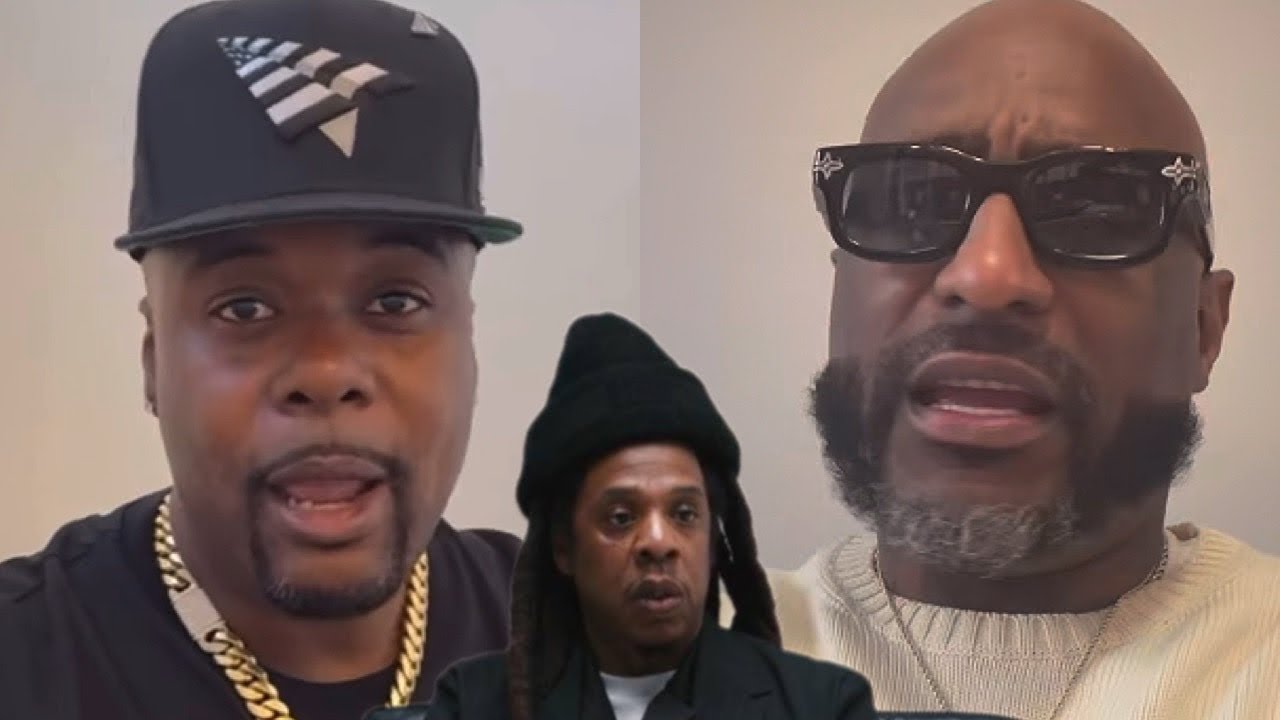 The diss, posted on social media, directly targeted Bleek, suggesting a personal slight from the billionaire mogul. “Jay-Z did a whole interview with GQ when Memphis Bleek has a whole podcast,” Oschino’s post read, adding pointedly, “Your pop won’t even sit down with your clown AZZ.” The barbed comments quickly circulated online, forcing a response from the “What You Think of That” rapper.
Memphis Bleek fired back in the comments with dismissive, cryptic flair. “Daily comination. You Chinese food out here popped and mad. Wish you the best,” he initially wrote. When pressed by other users, Bleek drew a clear distinction between platforms. “Hey, it’s levels to this GQ versus podcast. We can’t be serious, right?” he stated, implying the corporate reach of a legacy magazine like GQ operates on a different tier than most cultural podcasts.
Oschino, however, doubled down, alleging deeper personal grievances. He claimed Jay-Z didn’t want Bleek using “Rock” in his podcast name and noted that Hov was in town but didn’t visit Bleek’s restaurant. “Bleak still got his whole sausage down his throat, which I don’t mind at all,” Oschino wrote, “but once you play with Colorado O, he going to say stuff like this.”
The roots of this current clash, according to commentary from Urban Politicians TV which amplified the post, trace back to a more sensitive issue. The host, Big Ant, explained that Oschino had recently made comments about the late son of fellow State Property member Freeway, which Bleek found deeply disrespectful. Bleek reportedly called Oschino to confront him, a conversation that soured their relationship and led Bleek to declare Oschino would never appear on his podcast.
This personal history now fuels the public debate over Jay-Z’s media choices. The core argument from commentators like Big Ant is not about entitlement, but cultural investment. The perspective posits that while Jay-Z owes no one an interview, his rare decision to speak on camera could have a monumental impact if shared with a platform rooted directly in the culture that built him.
“Jay-Z bought us there,” Big Ant argued regarding the GQ interview’s viewership. “Jay-Z could have interviewed with somebody on the block in Brooklyn that we never heard of. Once it got clipped up… everybody was gonna go see it.” The critique is a plea for hip-hop’s top-tier artists to occasionally bypass traditional corporate media and directly empower the new media ecosystems emerging from their own community.
The situation underscores the complex dynamics of loyalty, legacy, and business in hip-hop’s upper echelons. Memphis Bleek, a foundational Roc-A-Fella soldier, finds himself defending his position and access against pointed criticism from a former crewmate. His responses suggest a pragmatic understanding of the industry’s hierarchies, even as he faces scrutiny for not securing the ultimate “get” for his show.
Meanwhile, Oschino’s attacks blend personal grievance with a broader, perhaps resentful, commentary on proximity to power. The exchange has sparked fierce debate online, with fans and observers split on whether the criticism of Jay-Z is valid or if it represents the inevitable friction when legendary groups evolve and business diverges from brotherhood.
As the digital back-and-forth continues, with Oschino promising to “cook your toast” and “highlight you later,” the episode reveals the fragile threads of old alliances. It highlights the unspoken expectations that follow decades of shared history and the potent sting when those expectations are perceived to be unmet, playing out not in private but for the entire world to dissect and discuss.
The story remains developing, a potent mix of hip-hop royalty, personal beef, and a cultural conversation about where megastars choose to tell their stories. Whether this rift heals or widens further may depend on the next moves from both camps, and perhaps, on whether any response comes from the very top of the Roc Nation throne itself.
News
Andrew Mountbatten-Windsor has swapped his 30-room mansion for a modest two-bedroom caravan — now sitting in the garden of his Norfolk residence…
Andrew Mountbatten-Windsor goes from Grade II mansion to two-bed caravan as static unit arrives at Marsh Farm Andrew Mountbatten-Windsor has swapped his Grade II 30-room Royal Lodge mansion for a pre-owned two-bed static caravan costing £26,000, which now sits propped…
Princess Beatrice and Edoardo Mapelli Mozzi are taking a dramatic step behind the scenes — one that could either save their marriage… or change everything…
Princess Beatrice and Edo Mozzi are mulling over a move to the US to get marriage back on track and escape her parents’ Epstein scandal There can be little doubt that the lives of Andrew Mountbatten-Windsor’s children have been profoundly…
CAMERA CAUGHT — Princess Catherine’s Unusual Gesture During Church Service Sparks Questions — And William’s Reaction Says It All
Princess Kate pictured making unusual gesture during church service with Prince William The Princess of Wales joined her husband Prince William for the Archbishop of Canterbury’s installation at the Kent cathedral on Wednesday © Getty Images The Princess of Wales was impeccably…
Christiane Amanpour Faces Cancer Again — And Her Strength Is Inspiring Millions
Christiane Amanpour, the British-Iranian journalist and CNN’s Chief International Anchor, has confirmed that her battle with cancer has returned for the third time. However, in a heartfelt and powerful message, she assured her viewers that her condition is being “very…
After 18 Years, NCIS Just Lost a Legend — And Fans Are Still in Shock
CIS fans have been left shocked after a huge plot twist saw a major character killed off in episode 13 of season 23, which aired on Tuesday. Marking its 500th episode, the hit police procedural delivered a dramatic instalment and, while…
The Other Bennet Sister Is Flipping Jane Austen’s World — And Fans Are Hooked
LONDON — For over two centuries, she was the punchline. The awkward middle sister with the “regrettable” spectacles and the poorly-timed piano solos. But this March, Mary Bennet has finally stepped out of Elizabeth’s shadow, and the results are leaving…
End of content
No more pages to load