Michael Che withdraws from Kevin Hart’s Netflix roast, slamming the all-white writing team and their reliance on racially charged shock humor.
Comedian Michael Che has publicly withdrawn from Netflix’s highly publicized live roast of Kevin Hart, delivering a scathing indictment of the event’s all-white writing team and their reliance on racially charged shock humor.
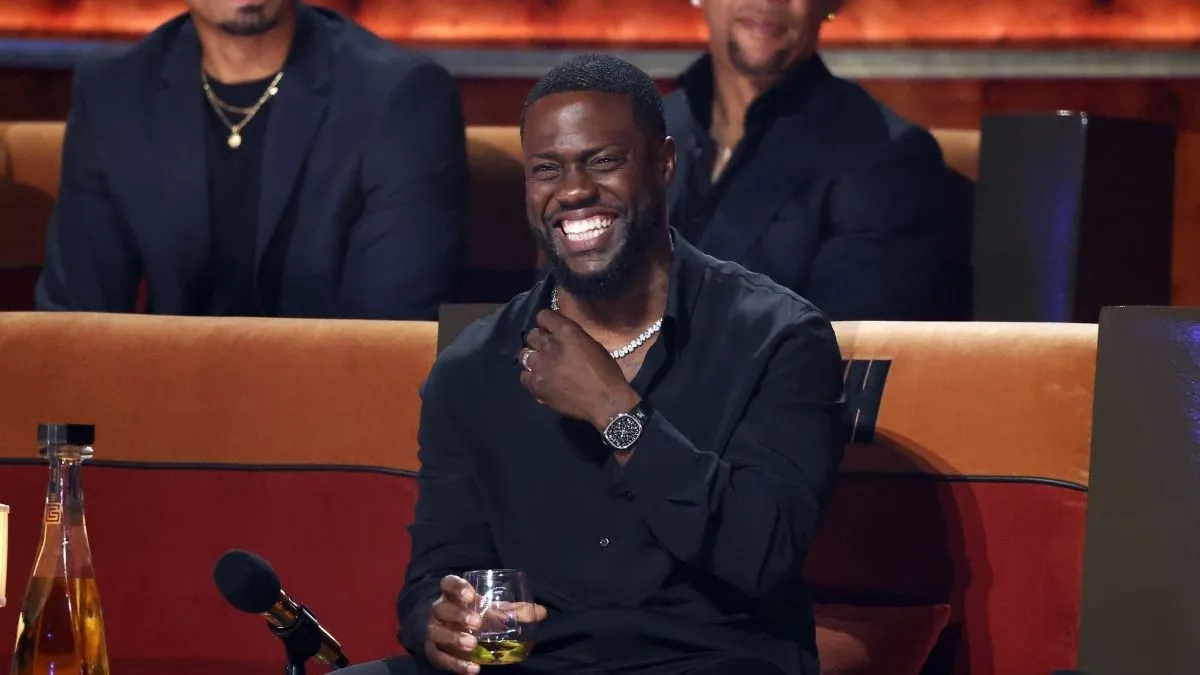
The decision by the prominent Saturday Night Live anchor exposes a deepening fracture within the global comedy landscape. As streaming platforms monetize controversial content to drive subscriptions, the debate over the ethical boundaries of insult comedy and the cultural competence of writers’ rooms has reached a critical flashpoint, reverberating from Hollywood to digital audiences worldwide.
Michael Che was initially billed as a marquee performer for the live Netflix special, a high-stakes broadcast designed to celebrate—and eviscerate—the career of Kevin Hart, arguably the most commercially successful Black comedian of the past decade. However, citing creative differences and scheduling conflicts, Che abruptly exited the roster just days before the telecast.
Following his departure, Che utilized social media to launch a targeted critique of the underlying mechanics of the roast. He pointedly highlighted the discrepancy between the subject of the roast and the demographic makeup of the joke writers. “Let’s do a roast celebrating the career of the most successful Black comic in the last 10 years,” Che wrote sarcastically. “Who should we get to write it?”
He subsequently shared an image of the five joke writers hired by comedian Shane Gillis—Nick Mullen, J.P. McDade, Mike Lawrence, Dan St. Germain, and Zac Amico—noting that the entire team was white. This stark contrast served as the foundation for Che’s broader argument regarding the trajectory of modern insult comedy.
Che’s critique extended beyond mere representation, delving into the actual substance of the material produced. He argued that there is a fundamental divergence in how different communities approach the art of the roast. “White guys and Black people joke different,” he observed, asserting that while Black comedians might focus on observational humor regarding style or behavior, the current wave of white roast writers leans heavily on trauma.
He specifically called out the reliance on “slavery, math, slain teens, sex crimes, slurs, [and] family secrets” as lazy mechanisms to elicit gasps rather than genuine laughter. This critique was validated during the broadcast itself, where performers like Tony Hinchcliffe and Shane Gillis delivered heavily scrutinized material that explicitly referenced slavery, lynchings, and polarizing historical tragedies.

The controversy surrounding the Kevin Hart roast is indicative of a broader trend in streaming entertainment, where algorithms consistently reward boundary-pushing content. The inclusion of figures like Hinchcliffe—who recently faced immense backlash for remarks made at a political convention—signals a deliberate corporate strategy to court controversy as a form of viral marketing.
Industry analysts note that the writers’ room often dictates the tonal boundaries of a production. When a room lacks diverse perspectives, the resulting material can frequently default to historical stereotypes under the guise of “edgy” comedy. For a global platform like Netflix, which boasts massive viewership across Africa, Europe, and Asia, the export of specifically American racial shock humor often lands with jarring dissonance.
The financial imperatives driving these live events are substantial, fundamentally altering how comedy is produced and consumed on a global scale:
Live comedy specials represent a multi-million dollar investment strategy for major streaming platforms seeking to retain subscriber engagement.
The Kevin Hart roast generated tens of millions of live concurrent streams, dominating global social media algorithms for a full 48 hours.
Industry diversity reports indicate that minority representation in late-night and special-event comedy writers’ rooms remains persistently below 20 percent.
Controversial clips from the roast accumulated over 500 million impressions across TikTok and X (formerly Twitter), validating the “shock value” marketing approach.
Che’s outspoken stance has ignited a fierce debate among comedians and critics alike. Traditionalists argue that a roast, by its very definition, is an arena where no subject is off-limits and sensitivity must be checked at the door. However, a growing faction of modern performers contends that relying on racial slurs and historical atrocities is an admission of creative bankruptcy.

As the dust settles on the Netflix special, the incident serves as a crucial inflection point. It forces audiences and executives to ask difficult questions about who holds the pen when cultural narratives are written, and whether the pursuit of viral shock value has permanently eroded the foundational artistry of stand-up comedy.
News
I WATCHED ONE EPISODE… AND SUDDENLY IT WAS 2 A.M.
Mark your calendars: Nicole Kidman’s hit espionage thriller Lioness returns for an unmissable third season this August. Created by Yellowstone’s Taylor Sheridan, the thrilling series follows an elite unit of female operatives tackling high-stakes undercover missions. © Ryan Green/Paramount+. Zoe Saldaña as Joe…
‘ONE DECISION COULD DESTROY EVERYTHING…’
‘COMPELLING’ PSYCHOLOGICAL THRILLER HAS VIEWERS COMPLETELY GRIPPED WITHIN MINUTES… Jo Joyner and Diane Kruger Star in Six-Part Drama Where an A&E Doctor Faces a Heartbreaking Moral Dilemma That Could Destroy a Friendship and Change Lives Forever!A gripping six-part psychological…
VIEWERS SAY THIS TRUE CRIME DOCUMENTARY LEFT THEM COMPLETELY SHATTERED…
WHEN A MUST-WATCH TRUE CRIME DOC SHAKES VIEWERS TO THE CORE… ‘MUST WATCH’ CRIME FILM PERFECT FOR Maternal Instinct FANS NOW STREAMING ON NETFLIX — Praised as One of the Most Shocking and Unsettling Documentaries in Years! Viewers say it…
THIS BRITISH THRILLER SAW THE FUTURE BEFORE ANYONE ELSE…
‘Long Before Today’s Dystopian Hits, This Film Predicted a World on the Brink’ — Michael Caine’s Chilling Masterpiece Is Now Streaming on BBC iPlaye In a career spanning more than seven decades, two Academy Awards, and some of the…
‘EVERYONE IS TALKING ABOUT THIS WEEK’S TV LINEUP…’
MUST-WATCH TV THIS WEEK IS ABSOLUTE CHAOS… From Channel 4’s Gripping Thriller to Netflix’s Harlan Coben Drama, These Shows Are Taking Over Screens and Leaving Viewers Hooked in Minutes!! This week’s TV lineup is packed with must-see entertainment, from…
“KATE MIDDLETON RETURNED TO THE VERY ROYAL EVENT THAT ONCE CHANGED HER FUTURE WITH PRINCE WILLIAM — BUT ONE HIDDEN DETAIL MADE THE MOMENT EVEN MORE EMOTIONAL…”
“18 YEARS LATER, SHE RETURNED TO THE PLACE WHERE EVERYTHING CHANGED.” Kate Middleton’s Garter Day Appearance Carried a Meaning Many Royal Fans Immediately Recognized For most people watching Garter Day at Windsor Castle, the focus was on the pageantry. The…
End of content
No more pages to load