Prince Harry and Meghan Markle are reportedly riding high on confidence following their recent trip to Australia, convinced that public sentiment is finally shifting in their favour. According to sources close to the Sussexes, the couple view the four-day visit as a major success—one that not only boosted their image but also proved they can still command attention on a global stage.

Their itinerary, which included community events, mental health initiatives, and meetings with veterans, mirrored many aspects of a traditional royal tour. To Harry and Meghan, this was no coincidence. Insiders suggest they see this as evidence that they can operate in a hybrid role—independent, yet still carrying the influence of the monarchy. In their eyes, this “part-time royal” model represents the future.

However, not everyone is convinced.
Royal commentators have been quick to point out that while the trip appeared polished, it may have been driven more by strategic public relations than genuine institutional impact. “It looked like a royal tour,” one observer noted, “but without the structure, accountability, or long-term commitments that come with official duties.” Another added more bluntly: “This isn’t modernization—it’s branding.”
The distinction matters, particularly within the framework set by the late Queen Elizabeth II. When Harry and Meghan stepped down from royal duties, there was a clear understanding that while they could retain their titles, they were not to use them for commercial gain. That line—between identity and monetization—was considered fundamental to protecting the integrity of the monarchy.
Yet critics argue that this boundary is increasingly being blurred.
From high-profile media deals to branded projects tied to their personal image, the Sussexes have continued to leverage their global recognition—recognition that is, in large part, rooted in their royal status. While they rarely use titles explicitly in product branding, analysts suggest the association remains central to their appeal. “You don’t need to say ‘royal’ for people to know what they’re buying into,” one media expert commented. “That connection is the product.”
This has led to growing concern among royal watchers that the couple’s activities risk undermining the very institution they once represented. By presenting themselves in ways that resemble official royal engagements—without the constraints that come with them—they may be creating confusion about what the monarchy stands for and who officially represents it.
“There’s a reason the system has clear boundaries,” one historian explained. “If those boundaries are ignored, even indirectly, it weakens the credibility of the whole structure.”
The Palace, as expected, has remained publicly silent. However, insiders suggest that the idea of Harry and Meghan positioning themselves as quasi-royal figures outside the institution is not being warmly received. The monarchy, by design, does not operate on a flexible or part-time basis. It relies on clarity, hierarchy, and consistency—values that are difficult to maintain if roles become self-defined.
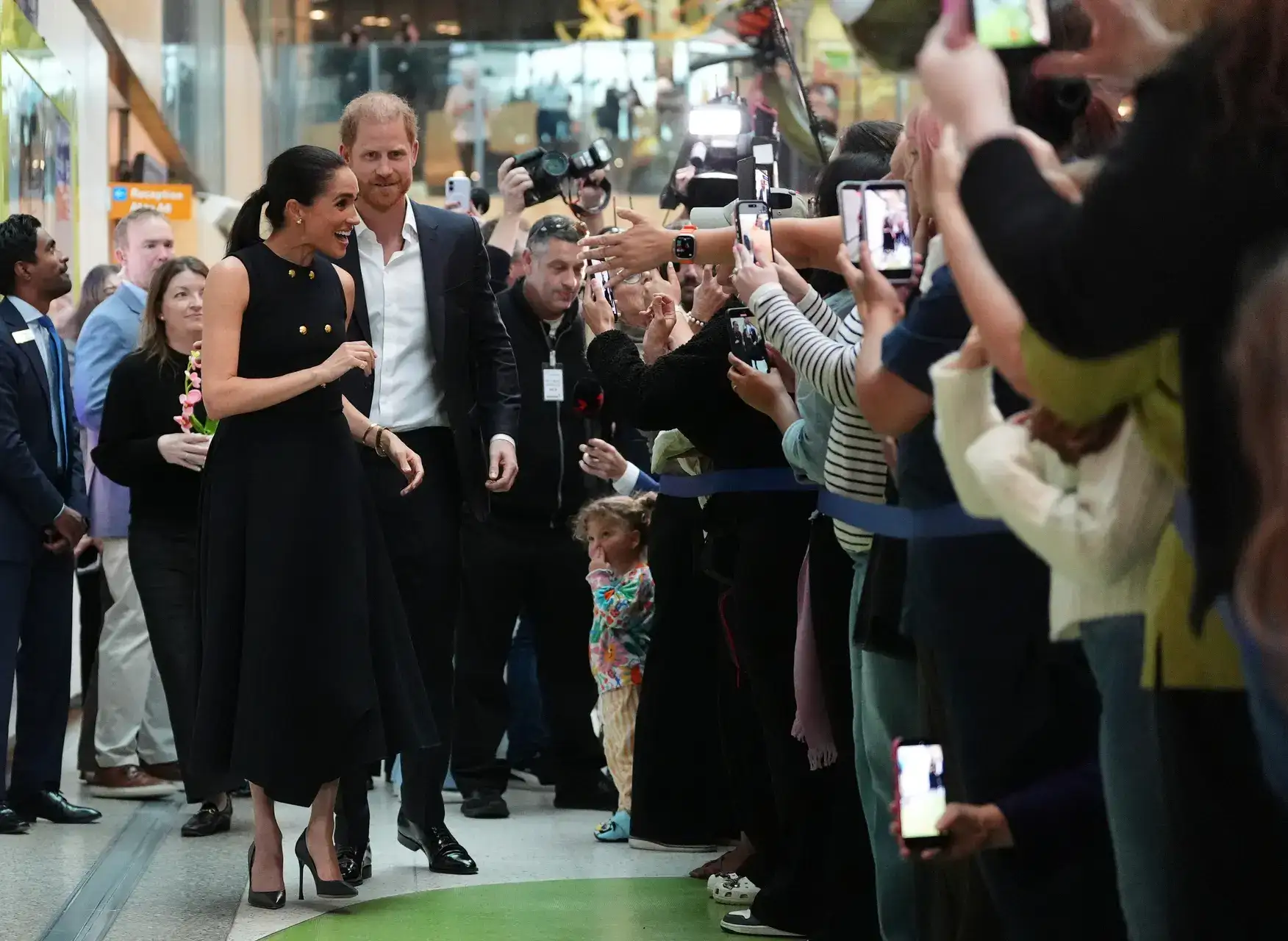
Meanwhile, public reaction appears far more mixed than the Sussexes’ internal optimism suggests. While some Australians welcomed the couple warmly, others questioned the authenticity of the attention surrounding them. Viral moments—such as a beachgoer completely ignoring their presence—sparked debate about whether the crowds reflected genuine admiration or simply curiosity.
“A crowd doesn’t always mean support,” one commentator observed. “Sometimes it just means people want to see what’s happening.”
This disconnect between perception and reality may be at the heart of the issue. For Harry and Meghan, the Australia trip reinforced their belief that they are still relevant, still influential, and still capable of shaping a new path. But for critics, it highlighted something else entirely: a carefully managed image that risks prioritizing visibility over substance.
There is also a growing narrative that the couple’s strategy relies heavily on timing—appearing during key moments, aligning with major themes, and ensuring maximum exposure. While this is standard practice in modern media, it becomes more controversial when tied to royal symbolism. “It starts to feel less like service and more like strategy,” one analyst noted.
Ultimately, the question is not whether Harry and Meghan can attract attention—they clearly can. The real question is whether that attention translates into meaningful, lasting impact, or whether it simply reinforces a cycle of visibility driven by branding and narrative control.
As they look ahead to a possible return to the UK, that distinction may become even more important. Because while the Sussexes may believe they are redefining the rules, the institution they left behind has not changed nearly as much—and may not be willing to meet them halfway.
News
BOMBSHELL CLAIM STUNS BRITAIN: MEGHAN MARKLE SPARKS FIERCE DEBATE OVER SHOCK “ROYAL RETURN” COMMENTS
The statement, made during what appears to be a high-profile sit-down conversation—possibly tied to ongoing promotions or personal reflections—has reignited fierce debate across media outlets, social platforms, and royal commentary circles. Coming at a time when Meghan’s favorability ratings in…
BREAKING: KING CHARLES STUNS THE PALACE WITH A DEEPLY SYMBOLIC GIFT FOR DUCHESS SOPHIE’S 61ST BIRTHDAY
“THE TRUE TORCHBEARER”: KING CHARLES STUNS THE PALACE WITH A DEEP SYMBOLIC GIFT FOR DUCHESS SOPHIE’S 61ST BIRTHDAY On her 61st birthday, Duchess Sophie didn’t receive diamonds or titles—she received something far more precious: the King’s absolute trust. In a…
BANKRUPT AND CUT OFF? KING CHARLES REPORTEDLY SHUTS THE ROYAL WALLET AS PRINCE WILLIAM DRAWS A HARD LINE WITH HARRY
“THE ROYAL ATM IS CLOSED…” — New Claims About Harry’s Financial Future Are Fueling Major Royal Speculation 5 Fresh rumors surrounding Prince Harry, Duke of Sussex and the Royal Family are igniting fierce debate online after reports claimed the Duke…
CAMERA CAUGHT — Queen Camilla Welcomes Catherine’s Brother, James Middleton to Clarence House — But the Real Meaning Behind Their Meeting Is What’s Stunning Royal Fans…
James Middleton attended a royal reception for Medical Detection Dogs at Clarence House, the London home of King Charles and Queen Camilla James Middleton and Queen Camilla greet one another at a reception for Medical Detection Dogs (MDD) at Clarence…
“SHE’S GONE MAD!” — THE SH0CKING CLAIMS BEHIND MEGHAN MARKLE’S PLAN TO RECLAIM HER ROYAL STATUS?!
“SHE’S GONE MAD!” — Meghan Markle’s Alleged “Princess Plan” Sparks Frenzy After Fresh Hollywood Setbacks 8 Fresh speculation surrounding Meghan, Duchess of Sussex is once again dominating royal headlines after explosive new rumors claimed the Duchess may be quietly attempting…
“THE PRESSURE IS GETTING HARDER TO HIDE…” — Fresh Speculation Surrounds Princess Beatrice and Edoardo Mapelli Mozzi After New Reports Surface
“THE PRESSURE IS GETTING HARDER TO HIDE…” — Fresh Speculation Surrounds Princess Beatrice and Edoardo Mapelli Mozzi After New Reports Surface 👀 5 New reports surrounding Princess Beatrice and her husband Edoardo Mapelli Mozzi are fueling intense discussion among royal…
End of content
No more pages to load