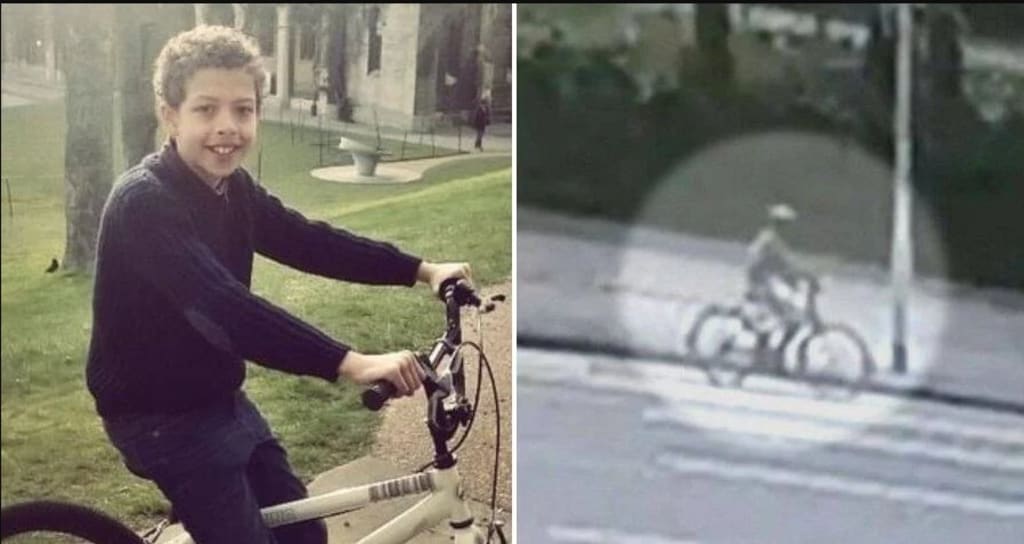
Screams Piercing the Belfast Night: Heart-Stopping Testimony Shakes Noah Donohoe Inquest as Police Accounts Clash with Mother’s Raw Grief
In the hushed solemnity of Belfast Coroner’s Court, where the air itself seems heavy with six years of unanswered questions, a single mother’s fight for truth collided head-on with chilling new revelations on February 4, 2026. Fourteen-year-old Noah Donohoe vanished without a trace on a warm June evening in 2020, his bicycle his only companion as he pedaled toward Cavehill to meet friends. Six agonising days later, his body was recovered from a storm drain in north Belfast. The official cause: drowning. But as the inquest—now deep into its third week before a jury—unfolds, the polished narrative of a tragic accident is fracturing under the weight of testimony that refuses to stay buried.
This is no dry legal proceeding. This is a mother’s unrelenting quest, a community’s lingering trauma, and a courtroom drama that has residents across Northern Ireland glued to every update. On this pivotal Wednesday, two ordinary neighbours from Premier Drive stepped forward to describe screams that tore through the midnight quiet—the kind of sounds that haunt you long after the echoes fade. A police officer’s carefully worded statements from years later were picked apart, revealing gaps that raise uncomfortable questions about how thoroughly Noah’s state of mind was truly probed in those frantic first hours. And through it all, Fiona Donohoe sat with the quiet dignity of a woman who has already buried her child and now refuses to let his story be simplified.

Noah Donohoe was just 14—a boy on the cusp of adulthood, cycling through the streets of north Belfast on June 21, 2020. He had told his mother he was heading to meet two friends near Cavehill, a popular spot for teenagers seeking adventure amid the city’s rolling hills. What should have been an ordinary summer evening spiralled into one of Northern Ireland’s most heartbreaking missing-person cases. For six days, volunteers, police, and desperate family combed every alley, park, and waterway. The discovery of his body in a storm drain brought a cruel kind of closure, but no peace. Post-mortem examinations confirmed drowning, yet the how and why have never sat easily with those who knew him best.
The inquest, convened years later to examine the full circumstances surrounding his death, has become a pressure cooker of emotion and evidence. By the third week in February 2026, the jury had already heard days of testimony about Noah’s final movements, police searches, and the mechanics of how a young cyclist could end up in such an isolated watery grave. But Wednesday’s session cut deeper than any before it. It forced everyone present—lawyers, witnesses, journalists, and Fiona herself—to confront the raw human terror that may have unfolded in those final moments.
The morning began with a police constable returning to the witness box, his evidence already under scrutiny from the previous day. Representing the Police Service of Northern Ireland (PSNI) was Donal Lunny, while Brenda Campbell KC, one of Northern Ireland’s most formidable barristers, stood firmly for Fiona Donohoe. Campbell wasted no time zeroing in on what she described as a “materially different” account between the officer’s contemporaneous notes from June 2020 and a formal statement he provided in January 2021—seven months after Noah’s death.

The discrepancy centred on Noah’s emotional state in the hours and days before he disappeared. In the 2021 statement, the constable recalled Fiona describing her son as “very weepy,” “in low mood,” and “more affectionate to her” than usual. She had, according to him, even requested that Noah’s school arrange counselling. Yet none of these details appeared in the officer’s original notes or the police logs compiled during the frantic missing-person investigation. When pressed, the constable maintained that his later recollection was honest, drawn from conversations with Fiona on June 22 and 23, 2020.
Campbell was unrelenting. She placed before the court the transcript of Fiona’s desperate 999 call on the evening of June 21—the call every parent dreads making. In it, Fiona spoke of Noah having been crying that day, but the tone was one of immediate worry rather than long-term concern. The officer insisted his focus at the time had been singular: “My focus was on finding Noah.” It was a human response, understandable under pressure, yet Campbell’s line of questioning left the air thick with implication. Had subtle signs of Noah’s vulnerability been noted but not fully acted upon? Or had they only crystallised in memory months later, when the tragedy demanded retrospective analysis?
Even more intriguing was the reference to a book that had apparently captured Noah’s imagination. The constable told the court that Fiona had spoken about her son’s fascination with Jordan Peterson’s self-help bestseller 12 Rules for Life. Noah, he said, “enjoyed the book to the point that he wouldn’t put it down,” though Fiona had emphasised this was “not new or unusual for him at all.” The inquest had previously heard that Noah discussed the book with friends. Now, with Brenda Campbell probing whether this detail had ever “become a feature” of the investigation or the inquest itself, the officer confirmed he specifically remembered her mentioning it. The exchange was clinical, yet it humanised Noah in a way statistics and timelines never could—a thoughtful teenager grappling with big ideas, perhaps navigating the turbulence of adolescence in ways his mother understood better than anyone.
The courtroom tension eased only slightly when the focus shifted to Premier Drive, a quiet residential street in north Belfast uncomfortably close to where Noah was last seen. Tanya Brown, a local resident, took the stand through her prepared statement, read aloud with the gravity such words deserve. It was a warm night on June 21, 2020. Tanya was lying in bed reading, her bedroom window thrown wide open to catch any breeze. Then came the sound that would change how she remembered that evening forever.
“I heard what sounded like a scream, but it didn’t sound as if it was close by, it sounded like it was some distance away,” her statement recorded. “It sounded like a girl screaming.”
She immediately went downstairs and woke her husband, Grant Brown, who had been sleeping on the sofa. He hadn’t heard the first cry. Together they stepped into the back garden. Tanya’s bedroom overlooks that space, giving her a clear view of the surrounding darkness. As they stood there, straining to listen, the second scream pierced the night.
“We stood in the garden, and that’s when I heard the second scream,” she told the court. “I stood outside for about five minutes before coming back inside.”
At first, Tanya dismissed it as teenagers messing around—something not uncommon in the area. But the very next night, June 22, when messages flooded her phone about a missing child and she saw the search operation unfolding near her home, duty compelled her to act. She contacted the police and shared what she had heard.
Under cross-examination by Donal Lunny for the PSNI, Tanya was asked the question many in the public gallery had been wondering: could it have been an animal? A fox, perhaps? Her reply was immediate and unwavering: “I’ve never heard a fox scream before.” When Brenda Campbell pressed her further, Tanya left no room for doubt. She was certain, at the time and still, that the high-pitched screams came from a human being.
Her husband Grant’s evidence, given after lunch, only intensified the chill. Sleeping downstairs, he was roused by Tanya and joined her in the garden. He too heard what he described as “a muffled scream… It sounded like a girl’s scream, it didn’t sound as if it was close by.” Later, around 3am, he was jolted awake again—this time by a “white flash like a torchlight” that swept across his kitchen window. He got up, looked around, but saw nothing. The family went back to sleep, unaware that just a short distance away, a 14-year-old boy’s life was hanging in the balance.
These accounts—delivered calmly yet powerfully—landed like stones in still water. For Fiona Donohoe and the wider family, they raised the terrifying possibility that Noah’s final moments may not have been solitary. Were those screams his? Was he calling for help as he struggled in darkness? Or were they unrelated, mere coincidence in a city where nights are rarely silent? The inquest cannot speculate, but the jury—and the public—now carry those sounds with them.
The afternoon brought yet another layer. A Detective Constable involved in the search on June 22 described her own small but poignant role. On duty that day, she had sent a text message directly to Noah’s mobile phone, hoping to reassure the missing teenager that he was not in any trouble. Later, when a member of the public found the phone in north Belfast, she accompanied the officer who took possession of it. While they held the device, it rang. The caller was Fiona Donohoe.
“I answered the phone as I had been speaking with Noah’s mom, Fiona, throughout the day,” the detective told the court, “and I thought it was best she immediately knew the phone was in police possession and explained the circumstances of it being located to her.”
It was a moment of devastating clarity: the phone that might have held clues, answers, or even a final message was now in official hands, but its owner was still missing. The detective’s evidence was measured, professional—yet it underscored the desperate scramble of those early hours.
As the day drew to a close at 5:05pm, Coroner’s Court adjourned until Thursday, February 5. No dramatic ruling, no sudden breakthrough—just the steady accumulation of detail that, piece by piece, paints a picture far more complex than any single headline could capture. Fiona Donohoe left the building flanked by supporters, her face a mask of quiet resolve. She has waited years for this process, and every testimony brings her both closer to understanding and further from the simple explanation she once hoped for.
What makes this inquest so compelling—and so painful for those following it—is the way ordinary lives intersect with unimaginable loss. Tanya and Grant Brown were not seeking the spotlight. They were simply neighbours whose peaceful evening was shattered by sounds they could not ignore. Their decision to come forward years later speaks to a deeper sense of civic responsibility that transcends personal comfort. In a city still healing from decades of division, their willingness to speak truth, however uncomfortable, reminds us that justice often begins with small acts of courage.
Meanwhile, the scrutiny of the police constable’s statements highlights a tension that has shadowed many high-profile cases: the difference between immediate action and retrospective reflection. When every second counts in a missing-child investigation, officers must prioritise life over nuance. Yet when that life is lost, those nuances matter enormously. Was Noah’s “weepy” mood and interest in a book about life’s rules simply a teenage phase, or did they hint at deeper struggles his mother alone truly understood? The constable’s honest admission that his focus was “finding Noah” is both reassuring and haunting—reassuring because it shows dedication, haunting because it leaves open the question of whether emotional red flags were fully documented in real time.
Brenda Campbell KC’s questioning has been clinical but never cold. She represents not just a client but a mother’s unyielding love. Her insistence on comparing statements, transcripts, and recollections is the very mechanism by which truth is stress-tested. For the jury, these exchanges are more than legal theatre; they are the tools with which they must weigh evidence that could reshape how Noah’s final hours are remembered.
Beyond the courtroom walls, north Belfast still carries the scars of that summer in 2020. The search for Noah mobilised hundreds—friends, strangers, community groups—all united in hope that dwindled with every passing hour. When his body was found, grief rippled outward like the water that claimed him. Parents held their children tighter. Teenagers who once roamed freely suddenly faced new restrictions born of fear. And questions—those persistent, aching questions—refused to fade.
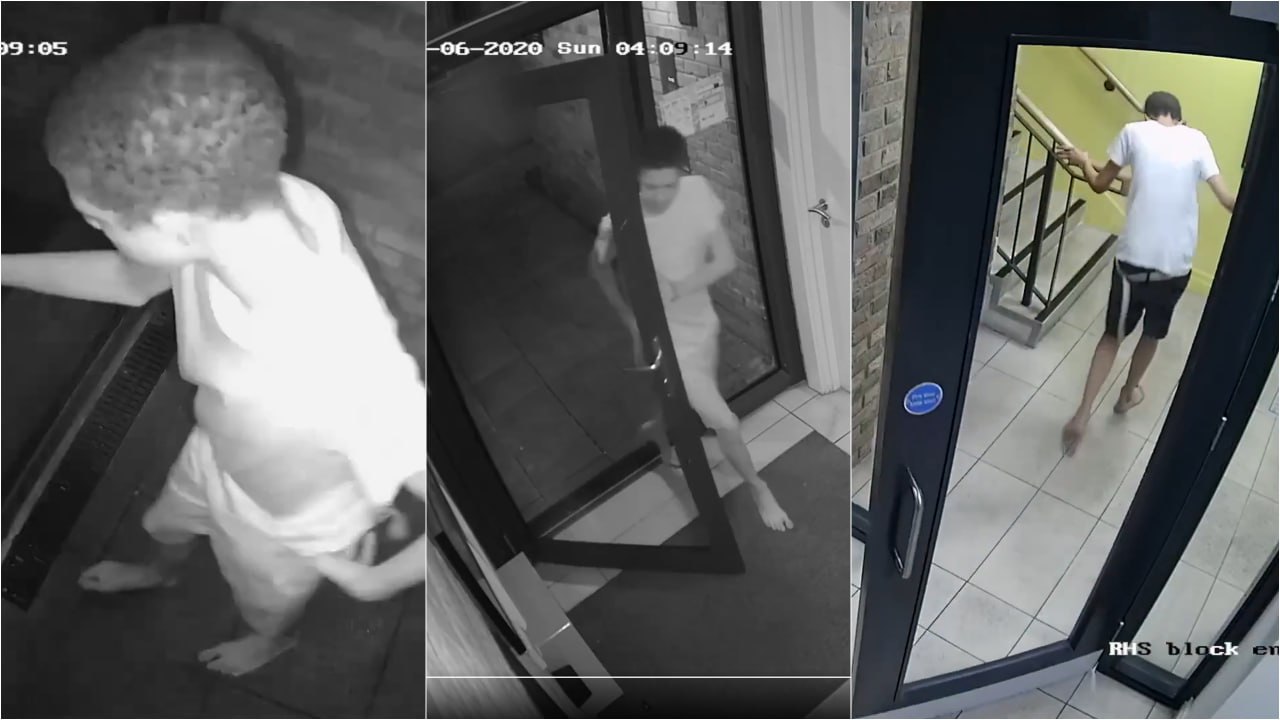
The inquest has already heard about CCTV footage showing Noah leaving home the night before he vanished. It has examined police logs, search strategies, and the physical realities of the storm drain where he was discovered. Yet Wednesday’s testimony added something intangible: the sound of fear itself. Those two screams, distant yet unmistakable to those who heard them, force us all to imagine the unimaginable. Was Noah alone? Did he encounter someone—or something—that turned an innocent bike ride into tragedy? Or were the screams, as some might still hope, nothing more than the cries of local youths whose paths never crossed his?
Grant Brown’s description of the “white flash” at 3am introduces another haunting element. Torchlight in the dead of night near the scene—coincidence, or the movement of someone who knew more than they have ever said? The inquest must remain neutral, but the human mind races ahead. Readers following this story from living rooms across Belfast, across Ireland, and beyond cannot help but wonder: what else remains unseen in the shadows of that night?
Noah himself emerges from the evidence not as a statistic but as a vibrant, complex boy. He read voraciously, discussed philosophy and self-improvement with friends, showed affection to his mother even as adolescence pulled him toward independence. The image of him curled up with 12 Rules for Life, unwilling to put it down, is both endearing and poignant. It suggests a young mind seeking structure in a world that, for too many teenagers, feels chaotic. Fiona’s decision to mention the book to officers was not an attempt to overanalyse; it was a mother offering every possible clue that might help bring her son home.
The detective constable’s text to Noah’s phone—“You’re not in trouble”—was a small gesture of humanity amid chaos. It speaks to officers who refused to give up hope even as hours turned into days. When that same phone rang in police hands and Fiona’s voice came through, the circle of desperation closed. A mother reaching out to a device that could no longer answer for her child.
As the inquest resumes on Thursday, February 5, fresh witnesses will take the stand. The jury will continue sifting through timelines, statements, and possibilities. Fiona Donohoe will return, steeling herself for whatever comes next. For the Browns, their part may be done, but the memory of those screams will stay with them—and now with all of us.
This is more than a legal process. It is a community reckoning with loss, a mother’s demand for answers, and a stark reminder that no disappearance is ever truly solved until every voice has been heard. The screams Tanya Brown heard that night may never be fully explained. The discrepancies in police recollections may never be completely reconciled. Yet in pursuing these details with such determination, the inquest honours Noah’s short life in the only way that matters: by refusing to let it end in silence.
North Belfast has known too much silence over the years. On February 4, 2026, two ordinary neighbours and a determined legal team shattered that quiet once more. The echoes will reverberate far beyond the coroner’s court. They will reach every parent who has ever waited by the phone, every teenager who has ever felt unseen, and every citizen who believes that truth, however painful, is the only path to healing.
Noah Donohoe’s story did not end in that storm drain. It continues in this courtroom, in these testimonies, and in the hearts of those who refuse to forget. The jury’s verdict, when it comes, will carry the weight of six years of searching—not just for a boy, but for understanding. Until then, the screams linger. And so does a mother’s love, fierce and unwavering, demanding that her son’s final chapter be written not by assumption, but by evidence, compassion, and an unyielding commitment to the whole truth.
The people of Belfast are watching. The nation is listening. And somewhere in the quiet streets of north Belfast, two screams from a warm June night in 2020 still wait for someone—anyone—to finally give them a name.
News
“DRAKE… SHOW LOVE FOR RIHANNA… I WANT US BACK TOGETHER, BABY”🔥 FANS FLOOD RIHANNA’S COMMENTS AFTER SURPRISING ONLINE MOMENT
Drake Fans Flood Rihanna’s Instagram After Explosive Lyrics On New Album ICEMAN 4 Drake has once again pulled Rihanna into the spotlight through his music — and social media is now exploding because of it. The controversy erupted after fans…
Elderly Woman D1es After Being St:ruck By Police Car In Cairns As CCTV F00tage Emerges
4 A 71-year-old woman has tragically d!ed after being struck by a police vehicle in Far North Queensland, with newly surfaced CCTV footage now becoming a key focus of the investigation. The fatal incident unfolded shortly after 7am Thursday morning…
JUST MINUTES AGO: LANDMARK WORK-FROM-HOME RULING STUNS AUSTRALIA AFTER SYDNEY MUM DEFEATS COMPANY’S RETURN-TO-OFFICE DEMAND
A Sydney mother has won a major legal battle against her employer after refusing to fully return to the office — a ruling many experts believe could dramatically reshape workplace flexibility rights across Australia. The explosive case centered around a…
PARENTS ACCUSED OF K!LLING THEIR ONE-DAY-OLD BABY INSIDE HOSPITAL MATERNITY ROOM – EVERYONE LEFT SPEECHLESS OVER CH1LLING DETAILS EMERGE
A Pennsylvania community is in shock after two parents were charged with homicide following the d3ath of their one-day-old baby boy inside a hospital maternity ward — a case prosecutors are already describing as one of the most horrifying they…
JUST NOW: IDENTITIES OF THREE GIRLS WHO D!ED OFF BRIGHTON BEACH FINALLY REVEALED — HEARTBROKEN FATHER BREAKS SILENCE AND SH0CKED THE NATION
A devastated father has paid an emotional tribute after three sisters were found dead in the sea off Brighton beach in a tragedy that has left communities across the UK heartbroken and searching for answers. The women — identified as…
SON OF BOXING LEGEND SUGAR RAY LEONARD ARRESTED AFTER ALLEGED ATTEMPT TO BREAK INTO FATHER’S HOME
Sugar Ray Leonard’s Son Arrested After Police Respond To Disturbing Incident At Boxing Legend’s Home 4 The family of boxing legend Sugar Ray Leonard has been thrust into the spotlight after reports revealed his 25-year-old son, Daniel Ray Leonard, was…
End of content
No more pages to load