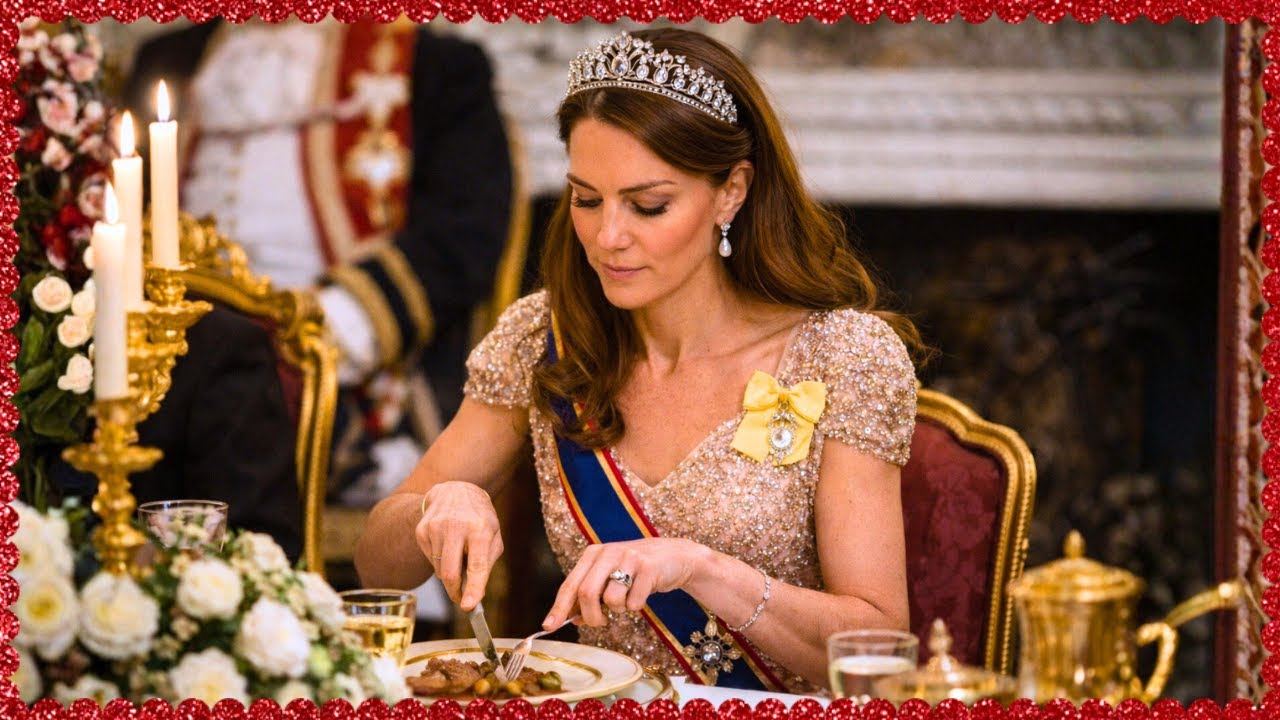
The Dining Rules Princess Catherine Must Follow: Inside the Strict Etiquette of Royal Banquets
At state banquets and formal royal dinners, Catherine, Princess of Wales, transforms every meal into a masterclass in grace, restraint, and symbolism. Far from casual family suppers at home, these occasions demand flawless adherence to centuries-old protocols—rules that emphasize hierarchy, respect, and composure under global scrutiny. While the modern monarchy, led by Prince William and Catherine, has introduced subtle flexibilities in less formal settings, state events at Buckingham Palace or Windsor Castle remain a “tense performance” of tradition.
Here are the key dining rules Catherine meticulously follows, drawn from longstanding royal etiquette:
1. Seating Order and Perfect Posture
Seating is never random—protocol officers arrange guests strictly by rank and precedence. Catherine sits beside Prince William or a senior dignitary, never ahead of higher-ranking figures like King Charles III or the monarch’s honored guest (who traditionally sits to the host’s right). This reinforces hierarchy and visual order.
Posture is non-negotiable: back straight, no deep leaning, elbows off the table (only wrists may rest lightly on the edge). Catherine mirrors the late Queen Elizabeth II‘s disciplined elegance—alert, composed, and camera-ready throughout multi-course meals.
Here are elegant glimpses of Catherine at state banquets, showcasing her impeccable posture and regal presence:
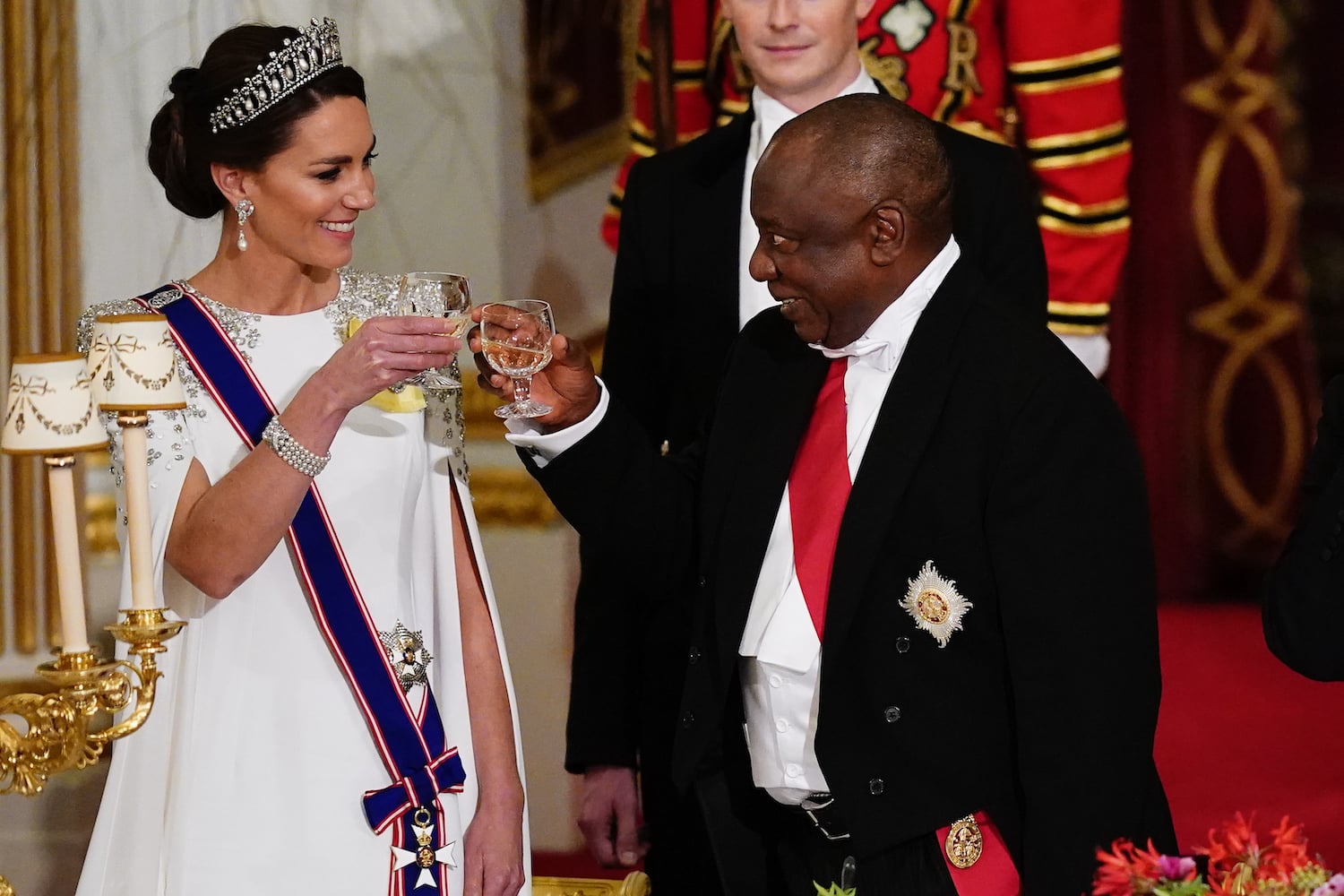
cheatsheet.com

whatkatewore.com

dailymail.co.uk
2. Eating Speed, Restraint, and No Seasoning Before Tasting
Catherine eats slowly and deliberately: small bites, quiet chewing, no audible sounds, and pauses during conversation. She never adds salt or pepper before tasting—doing so implies criticism of the royal chefs, a major faux pas.
Portions are controlled, alcohol minimal (glasses refilled discreetly by footmen), and she follows the monarch’s cues: no one starts eating until the host begins, and everyone stops when the monarch finishes.
3. Handling Bread and Tricky Foods
Bread is broken by hand into small pieces, buttered individually—never bitten whole or spread entirely at once. For bones, shells, pits, or seeds, she removes them discreetly with fingers (not cutlery) and places them neatly on the plate’s edge. Facial expressions stay neutral—no grimacing, even with unfamiliar textures.
These subtle moves prevent mess, protect dignity, and avoid tabloid fodder.
4. Knife and Fork Technique (European Style)
Catherine uses the classic European method: knife in the right hand, fork in the left (tines down), never switching. The knife isn’t held like a pen or pointed upward—gestures must remain refined.
When pausing, utensils form an inverted “V” (tips inward) to signal “not finished.” When complete, they’re placed parallel at the 6:00 position, handles aligned neatly for smooth service.
A classic example of proper royal cutlery placement and handling:

etiquipedia.blogspot.com
Etiquipedia: Amy Vanderbilt on Dining Etiquette
5. Controlled Conversation
Talk is limited to immediate neighbors—alternating left and right. No speaking across the table, no loud laughter, no animated gestures. Topics stay neutral: culture, shared interests, never politics, religion, or controversy to preserve the monarchy’s impartiality.
These rules, while “suffocating” in their rigidity, symbolize restraint, respect, and continuity. As former aides note, they’re rehearsed rigorously before events.
Royal state banquet tables are masterpieces of tradition—elaborate settings with precise measurements and gleaming silver:

elledecor.com
tatler.com

Yet, the Wales family bridges old and new: Catherine excels at these protocols while advocating for more humanity and balance in royal life. In a world of constant media attention, her mastery turns the dinner table into a quiet display of strength and poise.
What do you think—would you thrive under these rules, or do they feel outdated? Catherine’s grace makes it look effortless. 🍽️👑