PHOTO BY LIAM DANIEL
After raising eight children, surviving endless scandals, and keeping the ton’s emotional ecosystem afloat, Violet Bridgerton (Ruth Gemmell) has earned a little joy for herself. Bridgerton Season 4 finally lets her have it, complete with a passionate, secret romance and the audacity to say “not yet” to an engagement. It’s about time.
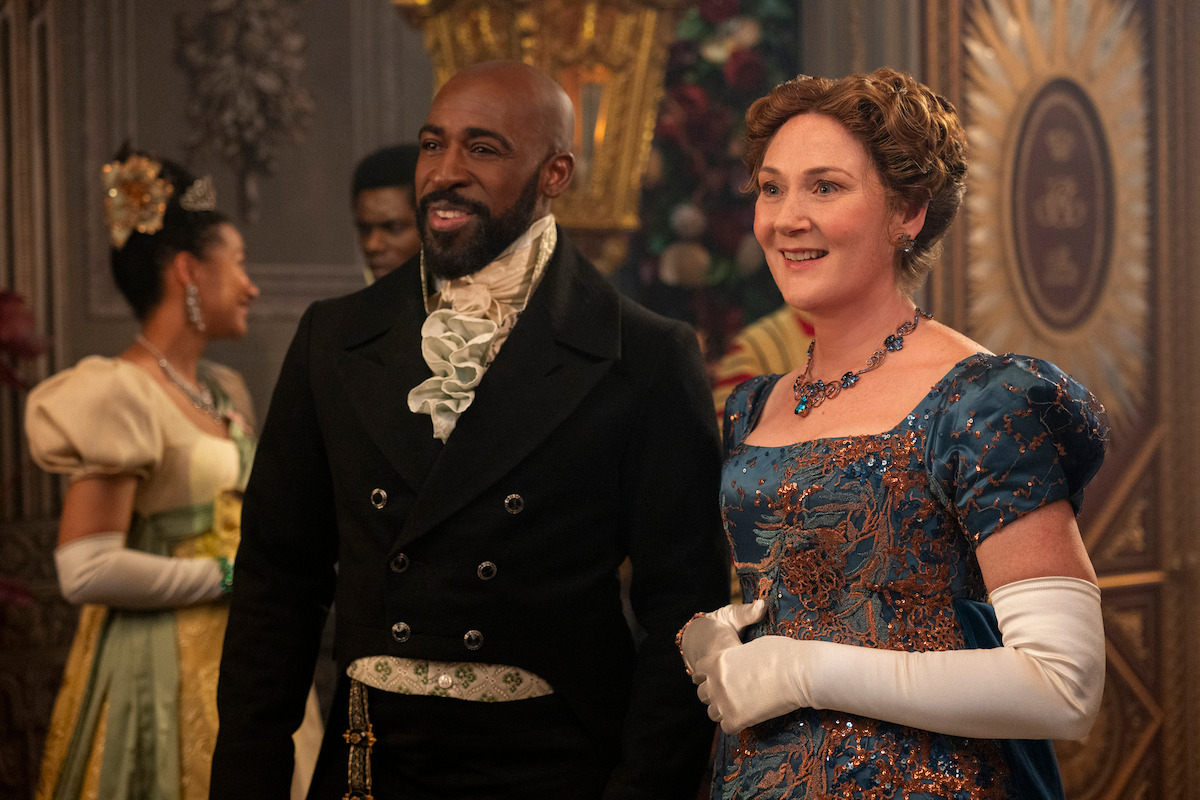
For years, Violet has been the beating heart of the Bridgerton family and the devoted widow of Edmund Bridgerton (Rupert Evans), channeling her grief into the matchmaking and management of their eight children with immaculate composure. But as she is drawn to Lord Marcus Anderson (Daniel Francis), Violet confronts a messy question: What if she wants something, too?
Solve word, logic, and visual puzzles based on Bridgerton
Start Solving
Marcus — Lady Danbury’s (Adjoa Andoh) younger brother — unsettles Violet from the moment they meet in Bridgerton Season 3. Their easy rapport cracks open a door Violet didn’t realize was still there after Edmund’s death. Their reflective, restrained, and deeply respectful Season 3 conversations forced Violet to admit the uncomfortable truth that loving Edmund fully doesn’t preclude other possibilities. Season 4 asks what happens when that door swings open again.
“It’s a really lovely thing for her to start to embrace herself again. She’s thrown herself into being a mother to these children, understandably and kind of rightly, since the death of Edmund,” Gemmell says on the must-watch Bridgerton: The Official Podcast. “But she’s just witnessed four children marry and be happy, and I think it’s like having a mirror put up in front of you and seeing all the things that you’ve missed.”
But this isn’t Bridgerton handing Violet a consolation love story — it’s a romance shaped by desire returning after loss and by Violet finally asking what she wants instead of what’s expected of her.
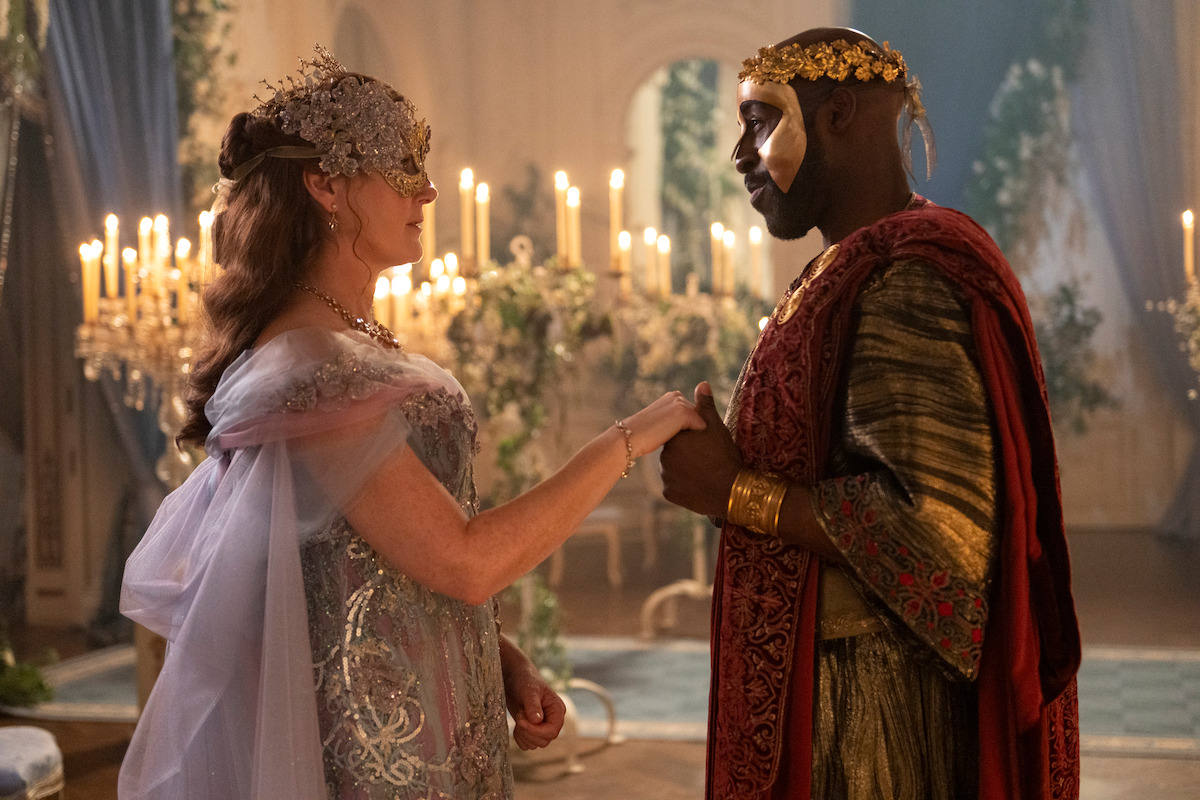
PHOTO BY LIAM DANIEL
The spark she didn’t plan for
After their Season 3 attraction, Violet’s second-chance romance picks up in Season 4 exactly where Bridgerton loves to start trouble: at a masquerade ball. Hidden behind Grecian costumes and polite society smiles, Violet locks eyes with Marcus, and suddenly the ton’s most famous matriarch is blushing like it’s her first season out.
Their flirtation — playful banter, glances, and a sensual wrist kiss so scandalous it’s a miracle Lady Whistledown didn’t notice — carries the weight of history. Violet is a widow who has managed to raise eight children on her own for years while still mourning her beloved husband. Marcus, a widower, turned a marriage that was far from a love match into decades of happiness — and then lost his partner. This isn’t a debutante chase or a strategic match from the marriage mart. It’s two people meeting each other where they are, shaped by love already lived.
“When you’ve loved and lost, I think there’s a shared understanding that certainly is comforting to be in,” Gemmell explains on the podcast. Francis agrees, noting that Violet and Marcus operate outside the usual social schemes. “There aren’t the usual games of the ton. There’s still a formality and the courtship process, but there isn’t the other moms and the women looking for a husband. She’s not in that forum.”
What follows is a daring romance built on stolen moments and expertly controlled restraint. Marcus begins appearing at Violet’s events with suspicious regularity, and they exchange wordless looks that broadcast every desire. Violet is thrilled, then panicked by her own happiness. After all, she’s spent years gently shepherding the rest of the Bridgerton family toward love while expecting nothing for herself. For Violet, it’s not just about wanting more — it’s about whether love can fit into a life she’s been holding together with impeccable composure.
Naturally, Violet’s secret doesn’t stay secret for long, at least not from the people who know her best. Enter Mrs. Wilson (Geraldine Alexander) — the Bridgerton housekeeper and this season’s unsung hero of discretion — who recognizes her boss’s romance almost immediately. A little finger-touching here, a suspiciously fast separation there, and Violet’s sudden ability to look guilty while sitting still tells Mrs. Wilson everything she needs to know.
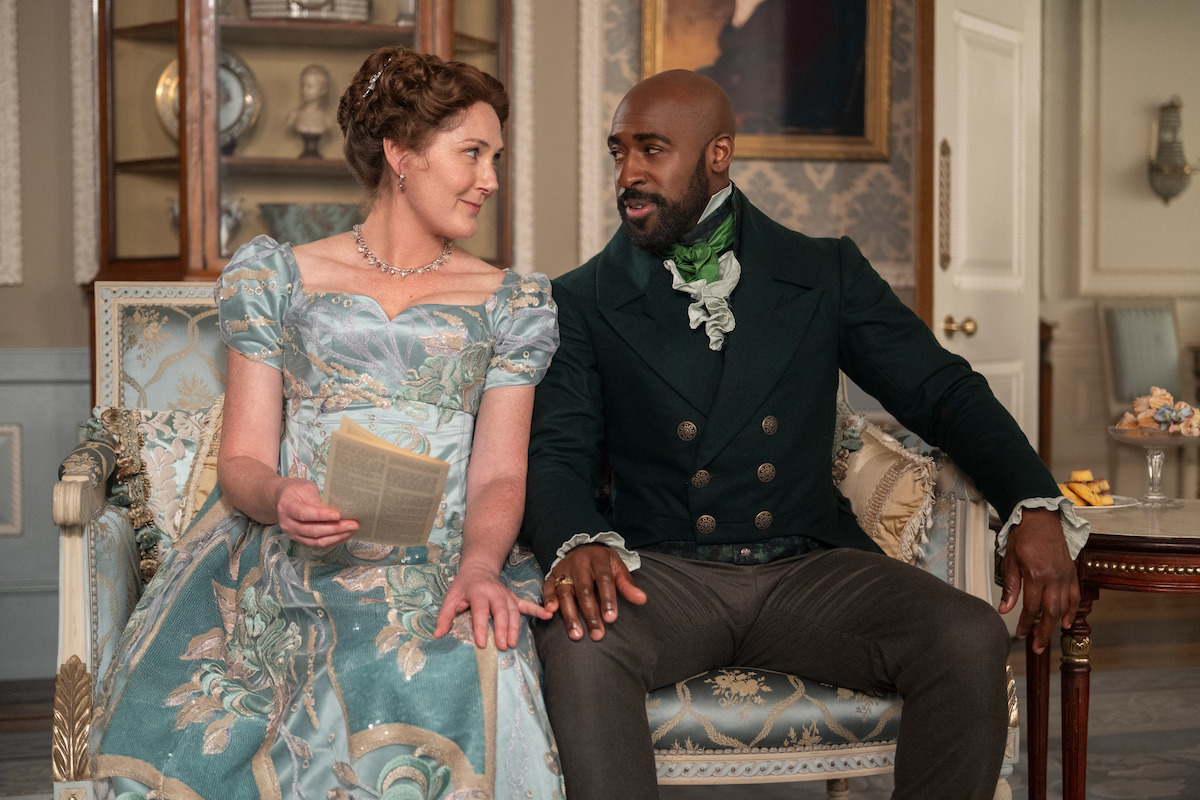
PHOTO BY LIAM DANIEL
A unique tea party
By Episode 4, Mrs. Wilson is already quietly facilitating the romance, arranging a discreet “evening tea” with the kind of efficiency usually reserved for household emergencies. (Reader, this is very much not about tea.) As Gemmell explains, Violet simply doesn’t have the vocabulary to be explicit. “There’s a conversation with Mrs. Wilson — and in the same vein that she can’t talk to her children about what an orgasm is — she can’t talk to Mrs. Wilson about exactly what she wants to do, so she talks about inviting somebody over for tea,” she tells Tudum. “And Mrs. Wilson says, ‘Everyone drinks tea.’ It’s a good line.”
With Mrs. Wilson’s logistical excellence smoothing the way, Violet finds the support she needed. Paired with Marcus’s patience, Violet finally allows herself to step into something she wasn’t even looking for but is so happy to have found.
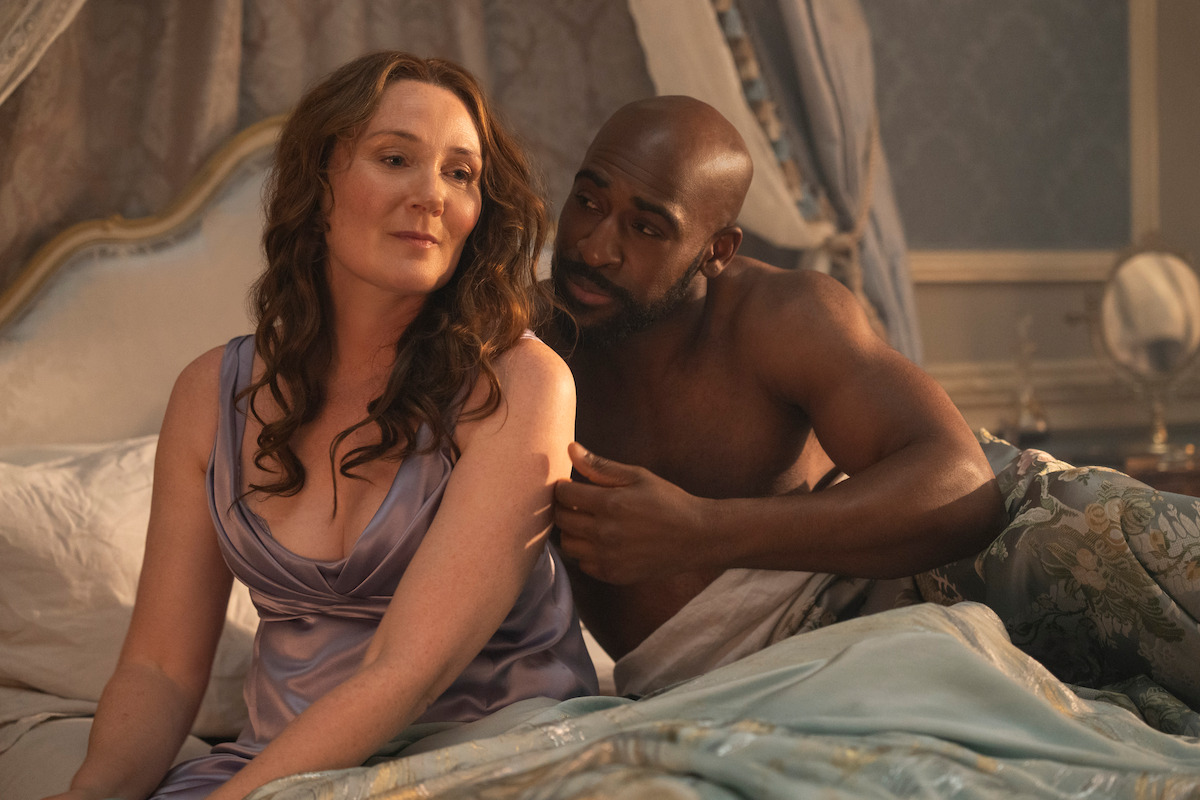
PHOTO BY LIAM DANIEL
With the house empty (thanks to Mrs. Wilson) and Marcus on his way, Violet does something she hasn’t done in years: She gives herself permission. Alone upstairs, she paces, smooths her robe, checks her reflection, then checks it again. No one has seen her like this — or how Marcus is about to see her — in years. But she isn’t unsure about what comes next. She braces herself in the best possible way.
On the podcast, Gemmell notes how layered that moment feels for Violet. “After 14 years, the idea of unveiling yourself to yourself, let alone to anybody else, must be absolutely petrifying.”
Marcus enters the room, excited and confident, explaining that Mrs. Wilson told him Violet was serving tea somewhere new. Violet lets the moment hang — then boldly, and with absolute clarity, delivers the line that instantly entered the Bridgerton canon: “I am the tea that you are having.”
“It’s a funny line. It’s an honest line. You can see the nerves in her,” Gemmell says about the now-iconic scene. “It’s quite lovely to portray a woman who — up until the moment Marcus is in the room — is still incredibly nervous. But as soon as he’s there, she’s up for everything.”
Marcus, ever the gentleman, offers to take things slowly. Violet gently shuts that down. “Get undressed,” she urges. What follows is a rare sight: Lady Bridgerton allowing herself to feel joy as a woman, not just as a mother. “This scene is Violet choosing herself,” showrunner Jess Brownell tells Tudum. “She’s spent so much of her life being the emotional anchor for her family. This is her finally allowing herself to ask [for] what she wants.”
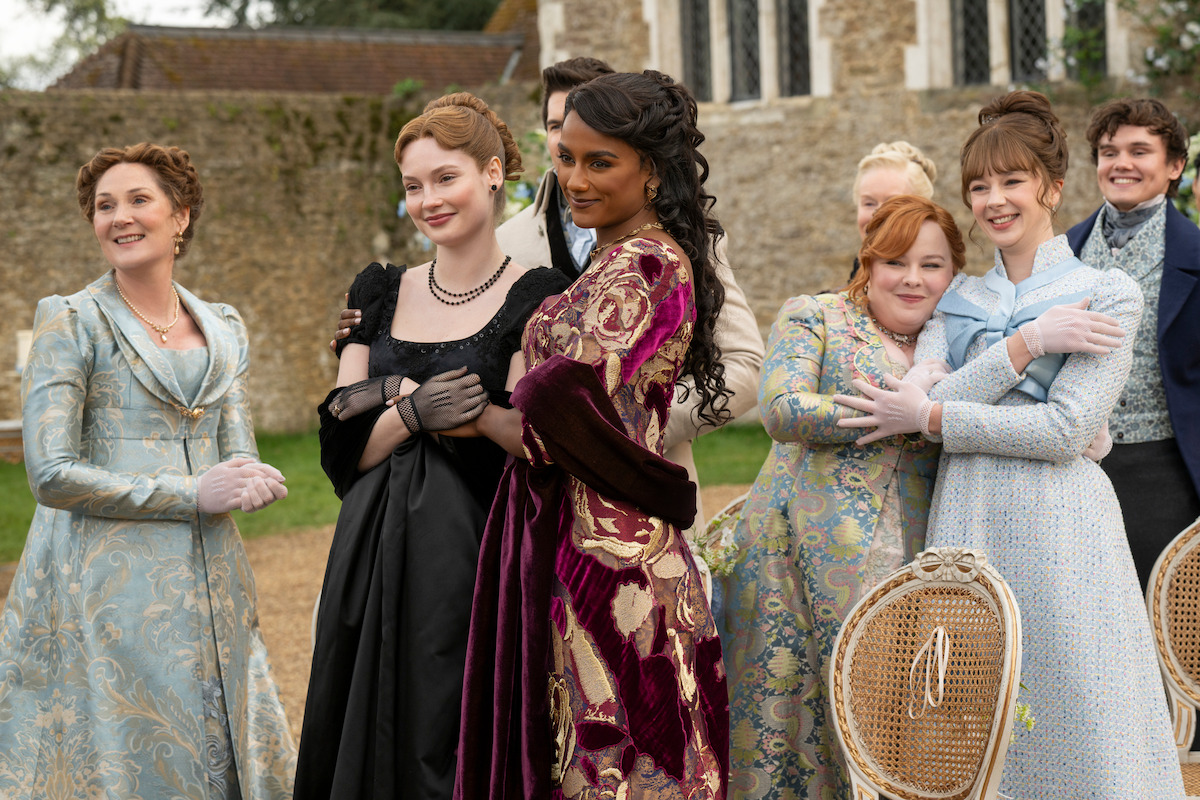
PHOTO BY LIAM DANIEL
Beyond the matriarch
Here’s where Violet’s arc sneaks up on you. In private moments with Marcus, from charged drawing-room encounters to an evening that’s definitely not about tea, Violet reconnects with parts of herself long buried under duty. She rediscovers her sensuality, boldness, and the thrill of being chosen as a woman.
Now the realization hits her hard: Violet spent decades knowing exactly who she is for her children, but she’s far less certain who she is for herself. That tension rises when she judges her son Benedict’s (Luke Thompson) romantic complications only to realize she sees so much of her younger self in her creative and passionate son. Oops. Violet misses who she was, and her relationship with Marcus stokes those “impulsive” fires.
But as Part 2 flies toward its finale, Violet is doing what she has done best for years: holding everything together while everyone else spirals. Benedict’s scandal? Managed. Francesca’s (Hannah Dodd) grief? Tended to. Hyacinth’s (Florence Hunt) future? Under careful consideration. Meanwhile, her relationship with Marcus begins to take on weight, culminating in Episode 6, when the two quietly decide to get engaged after their late-night “tea” forces them to consider what comes next.
It’s tender and sincere, and Violet does love Marcus; that’s undeniable. But the idea of becoming a wife again sends her into a very specific kind of panic. After decades defined by marriage and motherhood, she’s only just begun rediscovering who she is. Even as she agrees to the engagement, she struggles to share the news with her children, especially in the wake of the death of Francesca’s husband, John Stirling (Victor Alli). Violet realizes she’s rushing toward something certain while still figuring herself out.
Violet’s doubt becomes more apparent in Episode 7, when Lady Danbury reveals that Marcus told her about the engagement. Though Lady Danbury expresses that she’s “delighted for them both,” she also senses Violet’s hesitation and asks if everything truly feels all right. Violet insists she’s fine, then she catches herself. She admits her thoughts are tangled up in Francesca, concerned she’s not allowing herself to grieve the death of John. For much of the rest of the season, we see Violet put her full attention on her children rather than herself.
That push-pull between duty and desire is something Gemmell says Violet feels acutely at this moment. “Whatever Francesca is going through, I think Violet feels she needs to be there — she almost reverts back to being family first,” she says. “Her self-discovery is going to have to take a little bit of a backseat.”
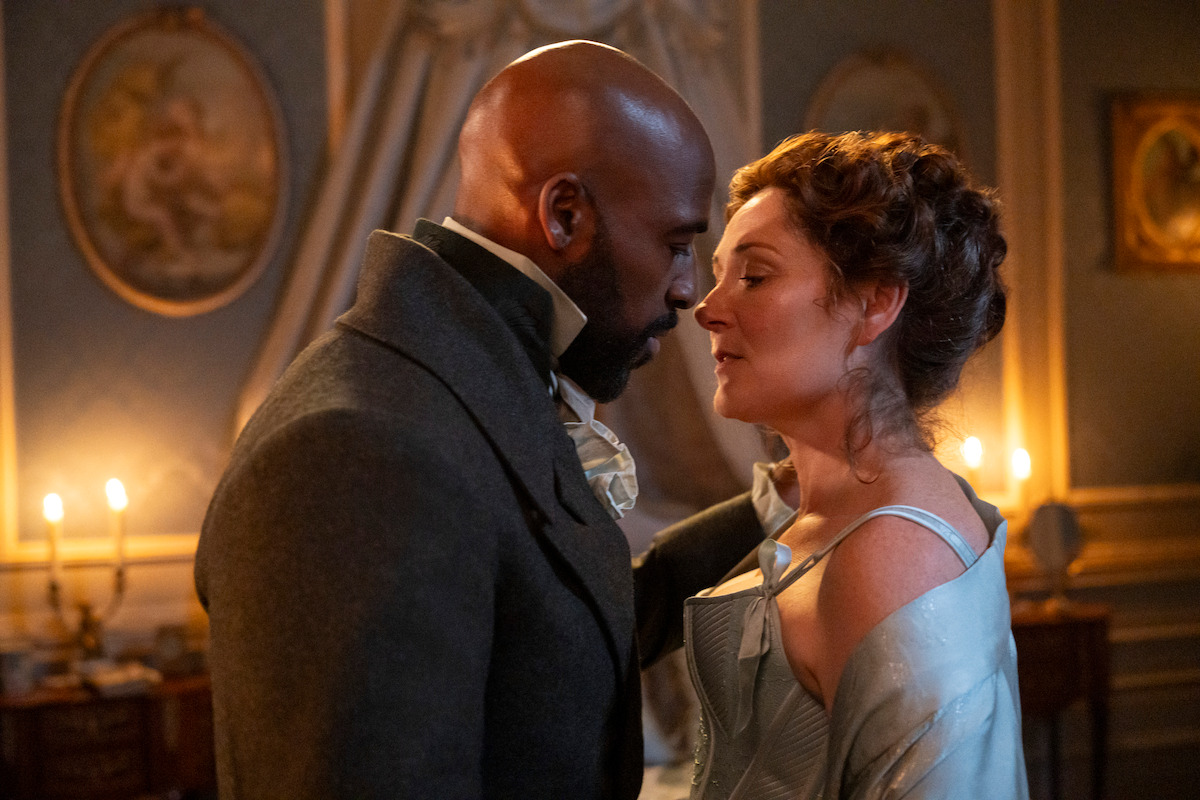
PHOTO BY LIAM DANIEL
A necessary goodbye
All that tension leads to the queen’s ball in the season finale — the kind of glittery, high-stakes setting in which Bridgerton usually locks in the happily-ever-afters (just ask Benedict and Sophie). But here’s the twist: Violet doesn’t choose the fairy-tale ending, and Marcus doesn’t force one.
In a quiet corner of the ball, Violet articulates what she’s been feeling all season. Her fear isn’t rooted in scandal, her children, or even her late husband. It’s herself. She tells Marcus she’s only begun to rediscover the woman she was before marriage and motherhood — her wild, carefree self — and she’s terrified that marriage would cost her that chance, even though the thought of losing Marcus hurts just as much.
Marcus listens and, heartbreakingly, tells the truth about his own needs. He wants a shared life, and he would wait if he believed Violet wanted the same future, but he’s beginning to doubt that she does. When Violet finally says, “I love you,” he already knows, he feels it. And because he loves her too, he refuses to stay in a relationship in which their paths no longer align.
So Marcus does the most loving thing possible: He lets her go. Marcus tells her he’ll always care for her and be there for her family, and that he plans to travel for a while. He even softens the moment with a wry callback to their secret past, suggesting they might one day catch up “over tea.” Actual tea.
Their goodbye is devastating in the softest way. There’s no villain and no betrayal, just two people acknowledging that love can be real and still not be enough — at least not yet.
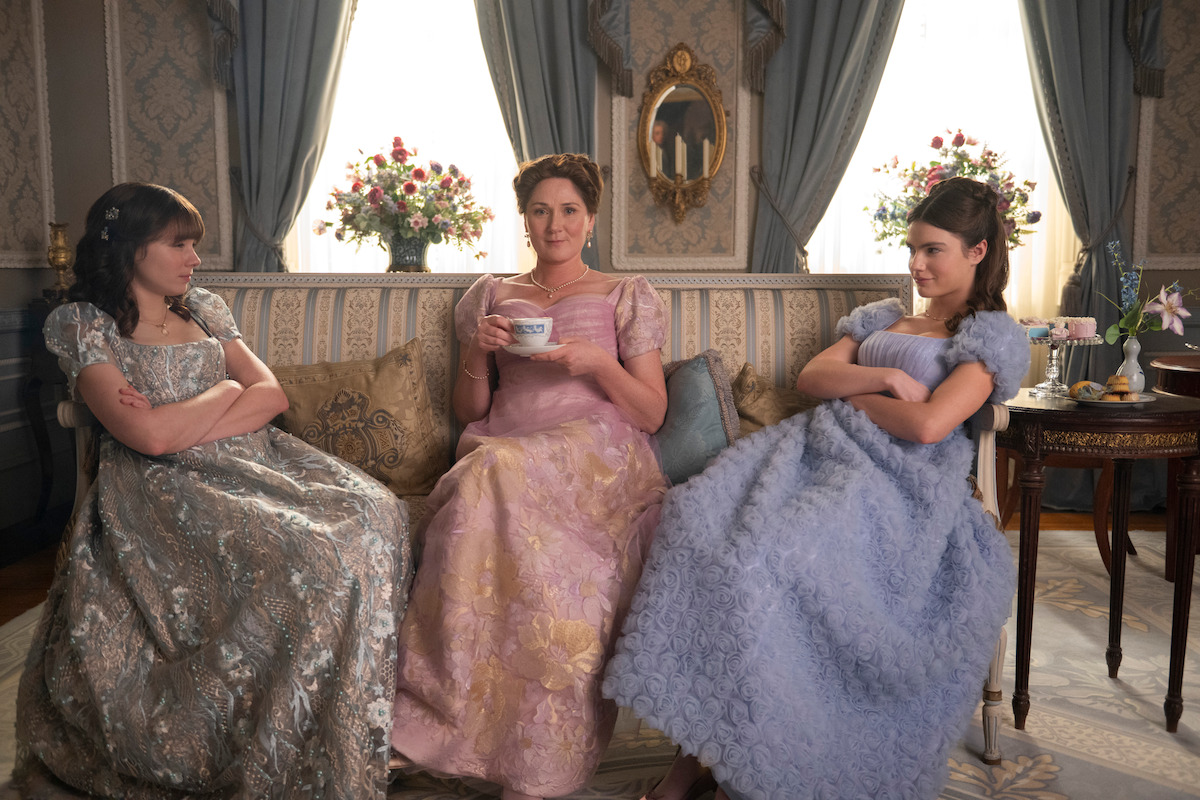
PHOTO BY LIAM DANIEL
Choosing herself
That choice to break off her engagement with Marcus turns the page to an entirely new chapter for Violet, one that’s as tender as it is uncertain. Gemmell explains that Violet is standing on the edge of a new journey — one shaped by Francesca’s fragility, the increasing reality of her kids starting families of their own, and the emotional fallout of saying no to a man she loves.
“Her children are leaving her rapidly,” Gemmell says. “Two of them aren’t quite there yet, and one of them is kicking and screaming to get there. Ironically, having said no to Marcus, she’s probably going to start to feel a little left out and a little lonely — the empty nest syndrome.” It’s a reminder that Violet’s choice isn’t easy or painless; it’s brave because it leaves space for both freedom and solitude.
But don’t worry, there’s still the possibility of more love in Violet’s future, as Bridgerton heads toward an already confirmed Season 5. “I think for Violet, [saying yes] to Marcus would be like her marrying the first guy right after her husband … I feel like she has more of a journey to go on,” Brownell says on the podcast, hinting that walking away from Marcus is less an ending than the start of something bigger. “She’s got some kids to see through, making sure that they get off on their way and debut before she’s ready to really do what she wants to really do. We’ll get there.”
Season 4 gives Violet Bridgerton an ending far more satisfying than a fairy tale. She leaves the season more empathetic toward her children, more forgiving of imperfection, and more open to a life that doesn’t come with a sure thing. After years of supervising the love matches of her children, her story proves that choosing yourself can be its own kind of romance.
See for yourself by (re)watching Violet’s journey on Bridgerton Season 4 on Netflix. And keep coming to Tudum for even more news out of Mayfair as we head toward Season 5.
News

“I was sorry for anything”: Kyle Sandilands breaks his silence and exposes all the network’s tactics to tear the pair apart
Kyle Sandilands has broken his silence in a blistering statement, claiming he is “not in breach” of his contract and asking ARN to let him return to his job on KIIS FM. The radio shock jock, 54, referred to his co-host Jackie…

Bridgerton Season 5 Lead Unveiled: The Return of ‘Spinster’ Eloise or Francesca’s Tear-Jerk Tragedy?
If there’s one thing Bridgerton has proven over the seasons, it’s that the show treats the book order like polite advice rather than a strict rule. Once Anthony Bridgerton wrapped up his story, the series happily wandered off the neat…

Jonathan Bailey Affirms the Importance of Live Performance Following Recent Controversies
Jonathan Bailey used his acceptance speech at the 2026 WhatsOnStage Awards to reflect on the importance of live performance, and his own early training in ballet, while accepting the Best Performer in a Play for his role in Richard II. Bailey won the fan-voted…

A Fatal Turn of the Wheel That Took a Teacher Forever: A Lifetime of Guilt Now Haunts 18-Year-Old Jayden Ryan Wallace
Late on Friday night, a group of teenagers in Gainesville, Ga., drove to one of their teachers’ homes, armed with rolls of toilet paper to toss over the trees as part of a good-natured prank. Their teacher knew it was…

Hughes’ neighbor speaks out on the teacher’s tragic d3:ath: A shocking revelation about glorious younger years!
The family of a Hall County teacher killed in what investigators say was a prank gone wrong is asking authorities to drop the charges against the students who were allegedly involved. According to deputies, a group of five teenagers had…

A Random and Brutal Attack on a Stranger: 37-Year-Old Man Faces a String of Serious Charges and a Bleak Future
Police have charged a 37-year-old man with murder after he allegedly attacked a 62-year-old man in Perth’s CBD, causing him to fall and strike his head on the pavement. The incident occurred on Hay Street near Victoria Avenue just after…
End of content
No more pages to load