The Lover’s Knot Tiara: How Princess Catherine Is Carrying Royal History Into a New Era
Few royal jewels command attention quite like the Lover’s Knot Tiara. When the Princess of Wales steps out wearing the storied piece, the moment resonates far beyond fashion. It is a visual statement of continuity — a rare blend of heritage, memory, and the future direction of the British Monarchy.
Formally known as Queen Mary’s Lover’s Knot Tiara, the jewel is among the most recognisable treasures in the Windsor collection. More than a century after its creation, it continues to symbolize the unbroken thread linking generations of royal women, from Queen Mary to Queen Elizabeth II, from Princess Diana to Catherine, the future Queen.
The tiara’s history dates back to 1914, when Queen Mary commissioned the House of Garrard to recreate a design inspired by a piece owned by her grandmother. Crafted with brilliant-cut diamonds and 19 suspended oriental pearls, the tiara was designed to move delicately with the wearer — a striking blend of elegance and authority. After Queen Mary’s death, it passed to Queen Elizabeth II, who wore it frequently in her early reign before later lending it to Diana, Princess of Wales.
It was Diana who transformed the Lover’s Knot into a global icon. Worn during some of her most memorable public appearances, the tiara became inseparable from the image of the “People’s Princess.” Though Diana famously remarked on its weight, she carried it with unmistakable glamour, cementing its place in modern royal history.
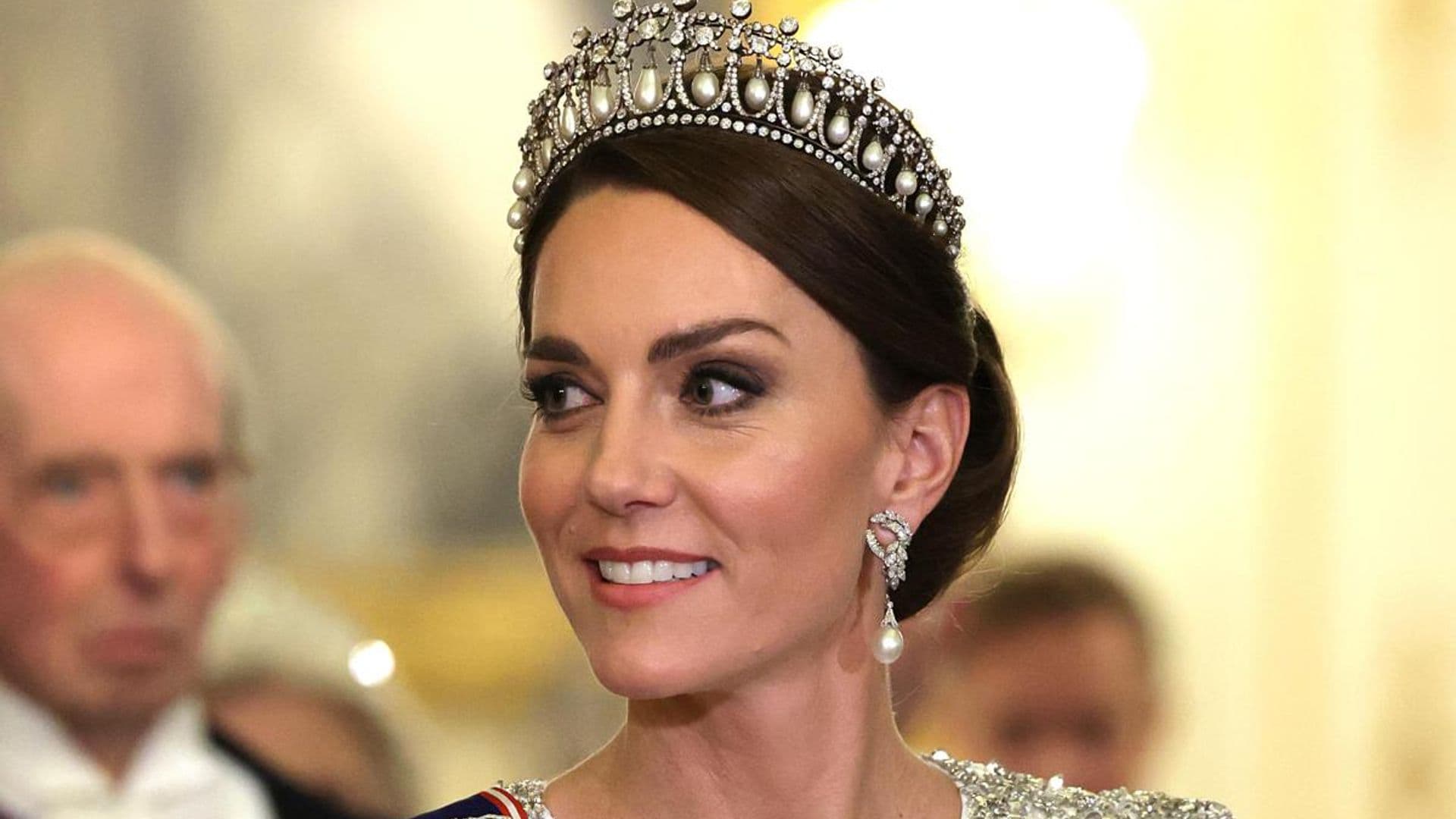
Today, the Lover’s Knot has found new life with Princess Catherine. Royal insiders note that Prince William views his wife’s choice to wear the tiara as a deeply meaningful tribute to his mother — a quiet but powerful gesture that reinforces both personal legacy and institutional continuity. Appraisers estimate the jewel’s monetary value at more than $2.6 million, yet within royal circles, its emotional significance far outweighs its price.
What distinguishes Catherine’s approach is how seamlessly she has made the tiara her own. Where Diana’s styling embodied drama and intensity, the Princess of Wales wears the piece with a lighter, contemporary confidence. Her appearances suggest not imitation, but evolution — honoring the past while asserting her own identity as a future Queen.
Under the reign of King Charles III, the Lover’s Knot Tiara has become a symbol of stability and transition. It reflects a monarchy that respects its history while embracing renewal through the woman who will one day stand at its helm.
As styles change and generations pass, the tiara endures — not as a relic, but as a living emblem of royal duty and continuity. Whether it is remembered most for Princess Diana or increasingly associated with Princess Catherine may depend on perspective. What is certain is that, in Catherine’s hands, the Lover’s Knot continues to shine as a defining symbol of the modern British Crown.