
The music and sports worlds are buzzing once again following **Super Bowl LX** on February 8, 2026, where global superstar **Bad Bunny** delivered a groundbreaking halftime performance. The Puerto Rican artist’s set, sponsored by Apple Music and held at Levi’s Stadium in Santa Clara, California, celebrated his heritage with vibrant visuals, historical nods to Puerto Rico, and high-energy hits that captivated millions. Special guests including **Lady Gaga** and **Ricky Martin** added star power, making it one of the most culturally significant halftime shows in recent memory. Viewers praised the production for its revolutionary representation of Latino culture on one of America’s biggest stages.
However, the glow of the performance was quickly overshadowed by comments from **Chris Brown**, the R&B singer known for his dynamic dance moves and chart-topping tracks. Shortly after Bad Bunny wrapped his set, Brown took to his Instagram Stories with a pointed message: “I THINK ITS SAFE TO SAY.. THEY NEED ME!  ” The post, accompanied by a smirking emoji, was interpreted by many as a subtle (or not-so-subtle) shade toward the halftime show and a bold claim that the NFL’s signature event required his involvement to reach its full potential.

The reaction was swift and polarized. Fans of Bad Bunny flooded social media with defenses of the performance, calling it “electric,” “historic,” and a “powerful statement” on identity and pride. Brown’s comment drew heavy criticism, with commenters accusing him of ego-driven pettiness and making the moment about himself. One viral response read, “Bad Bunny just put on a massive show and this man’s response is making it about himself. The desperation to stay relevant is showing hard right now.” Others were more direct: “Yeah, we need him to shut the f**k up,” while some referenced Brown’s past controversies, including his well-documented 2009 assault on Rihanna, suggesting the NFL would never invite him due to ongoing scrutiny and “cancellation” efforts.
Brown appeared unfazed by the backlash. In a follow-up Instagram Story, he posted, “Ain’t gone lie… I LOVE pissing some of yall off  ,” framing his initial comment as playful trolling rather than serious criticism. Supporters rallied behind him, arguing that his unparalleled performance skills—evident in sold-out arena tours and viral dance videos—would indeed elevate any halftime show. “He would kill the SB!” one fan wrote, while others pointed out his global appeal and consistent chart success as reasons the league “needs” fresh, high-energy acts beyond traditional hip-hop or pop selections.
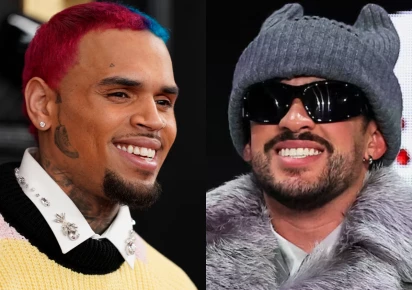
Bad Bunny, for his part, has not issued a direct public response to Brown’s post as of late February 2026. The “Tití Me Preguntó” hitmaker has stayed focused on the triumph of his performance, sharing behind-the-scenes clips and fan reactions on his social channels. Sources close to the artist indicate he views the halftime slot as a platform for cultural elevation rather than competition, and he has avoided engaging in online feuds throughout his career. In interviews leading up to the game, Bad Bunny emphasized the importance of representation: “This is for Puerto Rico, for Latinos everywhere. It’s bigger than music.” His set included elements like traditional bomba and plena rhythms blended with reggaeton, plus visuals honoring Puerto Rican history amid its complex colonial ties to the U.S.—a deliberate choice that resonated deeply with audiences.
The incident highlights ongoing debates about who “deserves” the Super Bowl halftime spotlight. The NFL, in partnership with Roc Nation (led by Jay-Z), has increasingly leaned toward acts that bring diversity and global reach. Recent performers include Usher (2024), Rihanna (2023), and now Bad Bunny, marking the first Latino solo headliner in the show’s history. Brown’s name has surfaced in fan discussions for years due to his dance prowess and hits like “Forever” and “No Guidance,” but his history of legal issues and public controversies has made him a polarizing figure. Some speculate that past tensions, including reported friction with industry gatekeepers, play a role in his exclusion.
Social media erupted with memes, polls, and heated threads. On platforms like Reddit and X (formerly Twitter), users debated whether Brown’s comment was “sarcastic trolling,” genuine confidence, or misplaced shade. One popular thread read, “Chris Brown needs to stay away from the NFL. He’s not the vibe they want.” Others countered, “They do need him—he’s one of the best live performers out there.” The discourse also touched on broader themes: representation in mainstream events, the impact of past behavior on opportunities, and how social media amplifies celebrity rivalries.
As the dust settles, Bad Bunny’s halftime show continues to rack up accolades. Viewership numbers placed it among the most-watched in recent years, with streams of his catalog surging post-game. Critics hailed it as “revolutionary,” praising the seamless integration of culture, spectacle, and artistry. Meanwhile, Brown remains active with new music releases and tour announcements, seemingly using the moment to stir conversation and remind fans of his enduring relevance.
The episode underscores the high stakes of the Super Bowl halftime platform—not just as entertainment, but as a cultural statement. While Brown’s bold claim sparked division, it also reignited talks about who gets to shine on the world’s biggest stage and why. For now, Bad Bunny stands tall as the artist who delivered a landmark moment, with no signs of letting online drama detract from the achievement. As one fan summed it up: “Bad Bunny didn’t just perform—he represented. That’s what the halftime show should be about.”
Whether the NFL “needs” Chris Brown remains a matter of fierce opinion, but the league’s choices continue to evolve toward inclusivity and global impact. In the end, the real winners are the fans who got to witness a historic performance, even amid the chatter that followed.