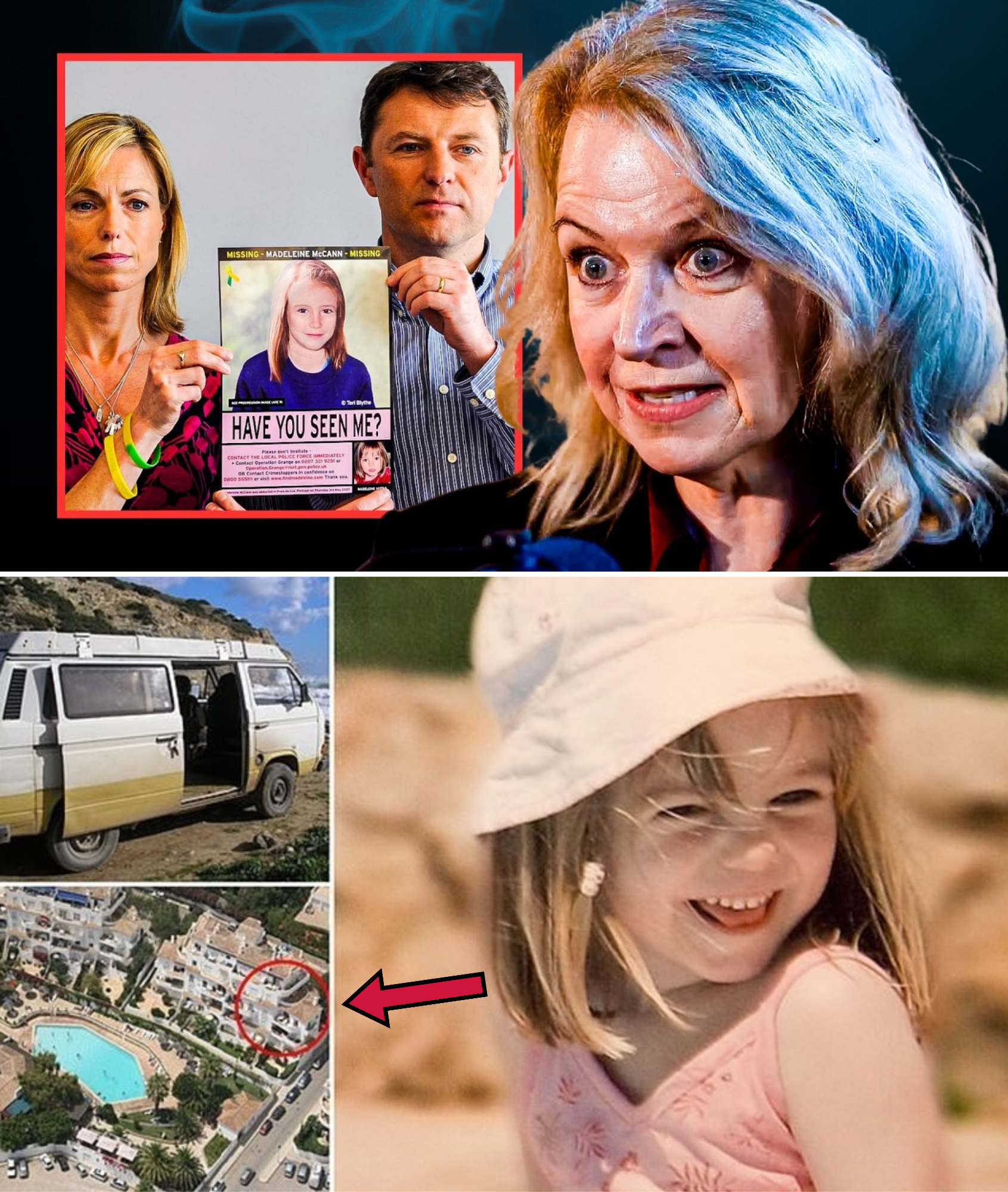
In a raw and unflinching podcast discussion released in early April 2026, investigative journalist Sonia Poulton has reignited fierce debate around the disappearance of three-year-old Madeleine McCann on May 3, 2007, in Praia da Luz, Portugal. Speaking on The Daily Heretic, Poulton described the case as “one of the biggest contemporary cover-ups” involving the British establishment, arguing that inconsistencies, forensic evidence, and high-level political intervention point to a narrative far different from the abduction story that dominated global headlines for nearly two decades.
Madeleine, the eldest of three children including twins Sean and Amelie, vanished while her parents Kate and Gerry McCann — both doctors — were dining at the Ocean Club’s Tapas restaurant with a group of nine adults, mostly fellow physicians. The parents have maintained they checked on the sleeping children every 15 to 20 minutes. Poulton, however, strongly disputes this as adequate supervision, noting the six-minute walk from the restaurant to apartment 5A made regular checks impractical and amounted to leaving young children unattended at night.
The journalist highlights that within hours of the disappearance, the story exploded across British media, appearing on breakfast television and in major newspapers despite the fact that a child goes missing in the UK roughly every five minutes, with many returning safely. Gerry McCann’s prior government work and the couple’s professional status as a neurologist and heart surgeon may have contributed to the unprecedented early attention, Poulton suggests.
Portuguese police quickly focused on the possibility that Madeleine had died inside the apartment rather than being abducted. They named Kate and Gerry as formal suspects (arguidos) based on forensic evidence. Renowned cadaver and blood-detection dogs, handled by expert Martin Grime and previously used in successful U.S. convictions without bodies recovered, alerted to blood spots behind the sofa in apartment 5A with a high DNA match. The same dogs later alerted in a rental car the family used after the apartment was sealed. No alerts occurred in neighboring apartments or unrelated locations.
Poulton speculates a possible accident: Madeleine may have woken, climbed onto the back of the sofa to look out the window, fallen onto the hard stone floor, and suffered a fatal head injury. She points to Kate McCann’s immediate reaction — leaving the twins alone in the apartment and running back to the restaurant saying “They’ve taken her” — as behavior that struck many as odd for a mother in shock. Gerry McCann also reportedly altered elements of his witness statement between May 4 and May 10, 2007.
Additional troubling details include a sighting by the Smith family of a man carrying a small child toward the sea around the time of the disappearance. The witness reportedly identified the man with 60-80% certainty as Gerry McCann. Poulton notes the Portuguese Supreme Court has never fully cleared the parents, despite the case being archived.
The journalist levels her strongest accusations at British authorities. She claims the investigation deliberately excluded the parents and their friends from standard scrutiny, contrary to normal procedure of first examining those closest to the victim. Prime Minister Tony Blair became involved almost immediately, with Gordon Brown continuing high-level interest after taking office. In 2013-2014, the Metropolitan Police launched Operation Grange, which has cost British taxpayers around £14 million despite the crime occurring in Portugal. Poulton argues this funding continues primarily “to stop the truth coming out,” with successive prime ministers and home secretaries maintaining the effort.
Media coverage also came under fire. Early reporting questioned the parents’ account, but after legal action, outlets like the Daily Express issued an unprecedented front-page apology. Poulton argues this effectively silenced further probing by mainstream outlets.
Public fascination with the case persists because, as Poulton puts it, “it doesn’t add up.” The refusal to hire a nanny despite the group’s setup, the rapid international media storm, the forensic dog alerts, statement changes, and political involvement all fuel ongoing skepticism. Poulton visited the scene herself and remains convinced that key questions about transparency and accountability have never been properly answered.
The discussion raises broader issues about how long-running investigations are handled, the role of media in shaping public perception, and the public’s right to information when authorities appear to withhold or control the narrative. Child neglect concerns, forensic science reliability, and the power of establishment influence are all brought into sharp focus.
As of April 2026, the case remains officially unsolved. Madeleine McCann is still listed as missing, yet no credible abduction evidence has ever led to an arrest of a perpetrator. Operation Grange continues, though critics argue it has yielded little new public information while consuming significant resources.
Sonia Poulton’s comments have sparked renewed online debate, with many praising her for asking uncomfortable questions that others avoid. Others accuse her of speculation without new evidence. Regardless of perspective, the Madeleine McCann case continues to haunt the public conscience, symbolizing unresolved questions about justice, media power, and institutional transparency in Britain.
Whether fresh leads emerge or the case fades further into history, the core issues raised — child safety, parental responsibility, and the integrity of high-profile investigations — remain as relevant today as they were in 2007. The world still waits for answers in what may indeed prove one of the most controversial and enduring mysteries of the 21st century.
News
BREAKING: KING CHARLES STUNS THE PALACE WITH A DEEPLY SYMBOLIC GIFT FOR DUCHESS SOPHIE’S 61ST BIRTHDAY
“THE TRUE TORCHBEARER”: KING CHARLES STUNS THE PALACE WITH A DEEP SYMBOLIC GIFT FOR DUCHESS SOPHIE’S 61ST BIRTHDAY On her 61st birthday, Duchess Sophie didn’t receive diamonds or titles—she received something far more precious: the King’s absolute trust. In a…
BANKRUPT AND CUT OFF? KING CHARLES REPORTEDLY SHUTS THE ROYAL WALLET AS PRINCE WILLIAM DRAWS A HARD LINE WITH HARRY
“THE ROYAL ATM IS CLOSED…” — New Claims About Harry’s Financial Future Are Fueling Major Royal Speculation 5 Fresh rumors surrounding Prince Harry, Duke of Sussex and the Royal Family are igniting fierce debate online after reports claimed the Duke…
CAMERA CAUGHT — Queen Camilla Welcomes Catherine’s Brother, James Middleton to Clarence House — But the Real Meaning Behind Their Meeting Is What’s Stunning Royal Fans…
James Middleton attended a royal reception for Medical Detection Dogs at Clarence House, the London home of King Charles and Queen Camilla James Middleton and Queen Camilla greet one another at a reception for Medical Detection Dogs (MDD) at Clarence…
“SHE’S GONE MAD!” — THE SH0CKING CLAIMS BEHIND MEGHAN MARKLE’S PLAN TO RECLAIM HER ROYAL STATUS?!
“SHE’S GONE MAD!” — Meghan Markle’s Alleged “Princess Plan” Sparks Frenzy After Fresh Hollywood Setbacks 8 Fresh speculation surrounding Meghan, Duchess of Sussex is once again dominating royal headlines after explosive new rumors claimed the Duchess may be quietly attempting…
“THE PRESSURE IS GETTING HARDER TO HIDE…” — Fresh Speculation Surrounds Princess Beatrice and Edoardo Mapelli Mozzi After New Reports Surface
“THE PRESSURE IS GETTING HARDER TO HIDE…” — Fresh Speculation Surrounds Princess Beatrice and Edoardo Mapelli Mozzi After New Reports Surface 👀 5 New reports surrounding Princess Beatrice and her husband Edoardo Mapelli Mozzi are fueling intense discussion among royal…
BREAKING UPDATE: PRINCESS BEATRICE IS AT A BREAKING POINT — AND NOW HER MARRIAGE MAY BE FEELING THE PRESSURE TOO
Princess Beatrice marriage trouble with husband Edoardo comes to light after Andrew scandal Andrew Mountbatten-Windsor scandals have cast a dark shadow on his two daughters as their young families begin to suffer the consequences. Princess Beatrice, who is the eldest…
End of content
No more pages to load