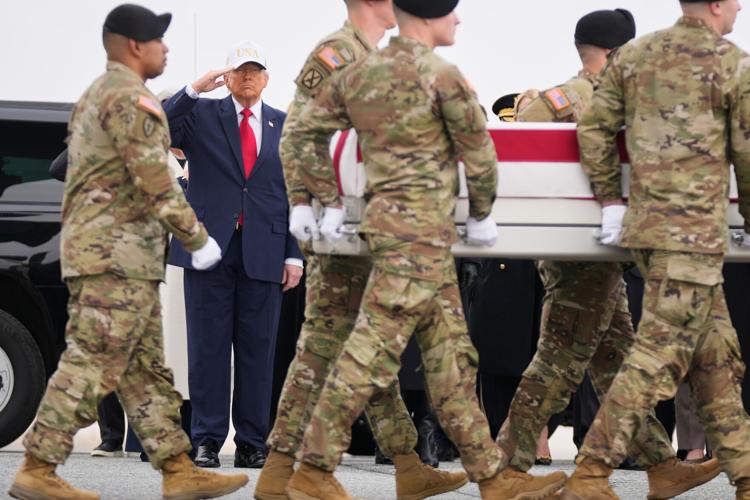
 The floodlights cast a stark glow across the runway at Dover Air Force Base as a profound stillness settled over the tarmac. In that quiet, broken only by the distant hum of engines and the rustle of flags in the cold night air, families waited for a moment that no parent, spouse, or sibling ever wishes to endure. One by one, they stood facing the aircraft that had carried their loved ones home — six American soldiers whose lives had been cut short thousands of miles away.
The service members had been killed in a devastating drone strike linked to Iran during escalating tensions in the region. The attack targeted a U.S. military facility in Kuwait, shocking the nation and sparking renewed fears about the widening conflict in the Middle East. For days, Americans had watched the news unfold from afar. But on this night, the war’s human cost stood directly before the grieving families gathered on the runway.
This solemn ritual — known in military tradition as a “dignified transfer” — marks the return of fallen service members to American soil. It is a ceremony carried out with precise movements, quiet respect, and deep symbolism. Every step, every salute, and every pause is meant to honor those who made the ultimate sacrifice.
Among those standing silently nearby was Donald Trump, along with senior military leaders and officials who had come to pay their respects. Yet the focus of the night was not on political figures or dignitaries. It was on the families — mothers clutching photographs, fathers standing stiffly with folded arms, spouses gripping small hands belonging to children who were too young to fully understand what was happening.
The aircraft door remained closed for several long minutes after the plane rolled to a stop. Those waiting knew what would come next, but no amount of preparation could make the moment easier.
Then, finally, the door began to open.
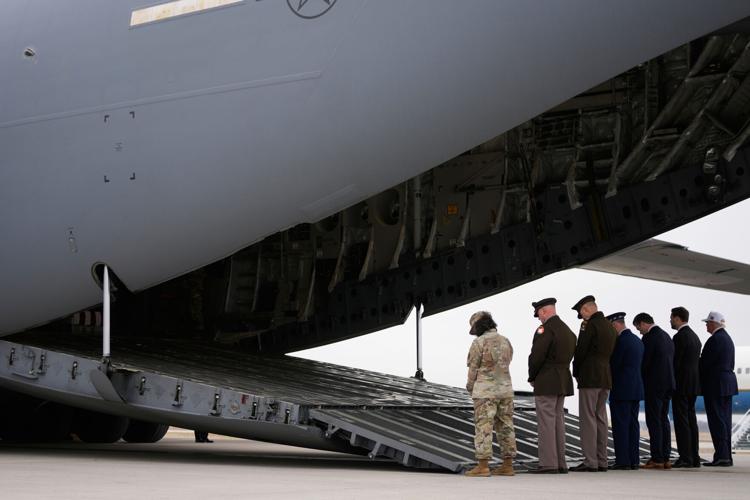
As the cargo bay slowly lifted, the bright interior lights spilled onto the dark runway, illuminating the figures inside. A team of uniformed soldiers stood at attention, preparing to carry their fallen comrades down the ramp.
And then the first transfer case appeared.
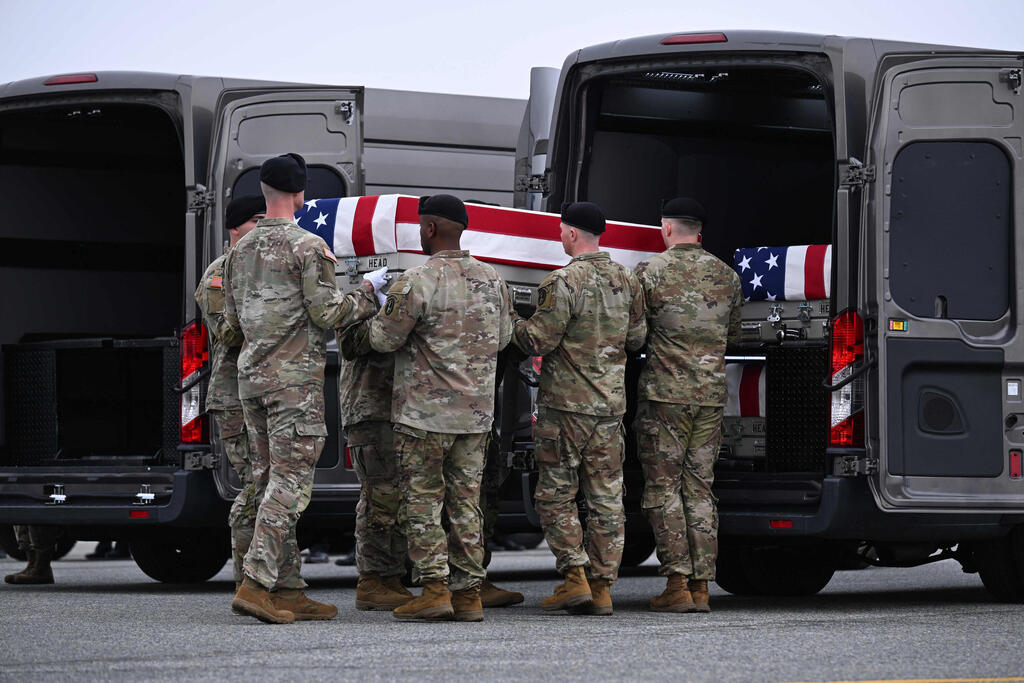
Draped in the red, white, and blue of the American flag, it moved forward with careful, measured precision in the hands of the honor guard. Each step taken by the soldiers was deliberate, synchronized — a silent promise that their brother or sister in arms would be treated with the utmost dignity on their final journey home.
According to witnesses on the runway, several family members instinctively reached for one another the moment the first flag-draped case came into view. A mother lowered her head into her hands. A young wife tightened her grip on the arm of a relative beside her. Nearby, a father stood perfectly still, staring straight ahead as if willing himself not to collapse beneath the weight of the moment.
But what happened next was what many said they would never forget.
As the honor guard reached the bottom of the ramp, they paused briefly beneath the aircraft lights — a pause that lasted only seconds but seemed to stretch far longer for those watching.
In that stillness, the enormity of the loss settled over the runway.
No one spoke. No one moved.
The silence was so complete that the faint clink of the soldiers’ ceremonial gear could be heard echoing across the tarmac.
For the families, those seconds were unbearable — yet somehow sacred.
One by one, the remaining five transfer cases followed. Each one carried with the same care. Each one representing a life that had once been filled with laughter, plans, and dreams beyond the battlefield.
Friends and relatives had traveled from across the United States to be there. Some had flown through the night, desperate to ensure they were present when their loved one returned home. Others stood quietly wrapped in coats against the cold, clutching folded letters or small keepsakes they planned to place near the caskets later.
Several witnesses described seeing tears fall silently down faces throughout the ceremony. But there were also moments of quiet pride — the kind that comes from knowing the person they loved had served something larger than themselves.
Military officials later spoke about the six soldiers not just as casualties of conflict, but as individuals — people who had volunteered to serve their country, often knowing the risks involved.
“They were all great heroes of our country,” one officer said quietly after the ceremony concluded.
For the families, however, the word “hero” carries both honor and heartbreak. Behind each transfer case is a story: a childhood, a family dinner table, a phone call home that will now never come again.
As the final salute was rendered and the honor guard slowly carried the last transfer case away from the aircraft, the silence returned.
It lingered long after the ceremony ended.
For those who stood on that runway at Dover, the image will remain etched in memory: six flags illuminated beneath the harsh glow of runway lights, carried with care by fellow soldiers who understood the weight not only of the caskets in their hands, but of the promise they represented.
A promise that those who serve — and those who fall — will never be forgotten. 
News
“‘SHE WILL LOVE THAT…’ — King Charles’ Quiet Gift For Princess Charlotte Is Melting Hearts Worldwide
The King picked up a special gift for his eldest granddaughter Princess Charlotte during his trip to Belfast yesterday. Charles, 77, together with Queen Camilla, made a visit to Northern Ireland this week and toured a digital learning hub on Tuesday where he met local business owners supported…
“VIEWERS SAY THE FINAL TWIST BROKE THEIR BRAINS…”
Calling all romance fans! Prime Video’s upcoming eight-part series, Every Year After, hits TV screens this June – and it’s shaping up to be a must-watch for anyone who loves a messy love story. The series, which comes from Sex and the…
“SHE WAS ONLY 13… AND SUDDENLY THE WORLD WANTED HER GONE.”
Netflix’s Most Haunting True Story: A Young Girl’s Defiant Stand Against the Shadows of WWII In the annals of human endurance, few tales burn as brightly as that of survival amid unimaginable horror. Netflix’s latest release, Shadows of the Forgotten, has…
“FANS THOUGHT THE CHAOS WAS OVER… THEN NETFLIX RENEWED IT.”
‘Big Mistakes’ Renewed for Season 2 at Netflix With New Partnership With Dan Levy Announced Picture Credit: Netflix Schitt’s Creek co-creator Dan Levy’s new Netflix series Big Mistakes ends with twists and cliffhangers aplenty, leaving the door wide open for more seasons. What’s…
“NETFLIX ALMOST SCRAPPED THE FILM COMPLETELY… NOW IT’S BECOMING A MASSIVE HIT.”
Netflix just dropped a brand-new movie perfect for those who love cheesy Hallmark flicks and shows like Virgin River. The film only arrived today (May 8) on Netflix, but the critics have already delivered their verdicts, with something of a…
“NBC IS BRINGING BACK A TRUE TV LEGEND… AND FANS ARE ALREADY DIVIDED.”
Boreanaz will be joined by former “SEAL Team” co-star Michaela McManus, as well as Felix Solis and Jacki Weaver. David Boreanaz last August; James Garner on ‘The Rockford Files’.Credit: Gilbert Flores/Getty; NBCU Photo Bank/NBCUniversal via Getty NBC has officially copped the…
End of content
No more pages to load