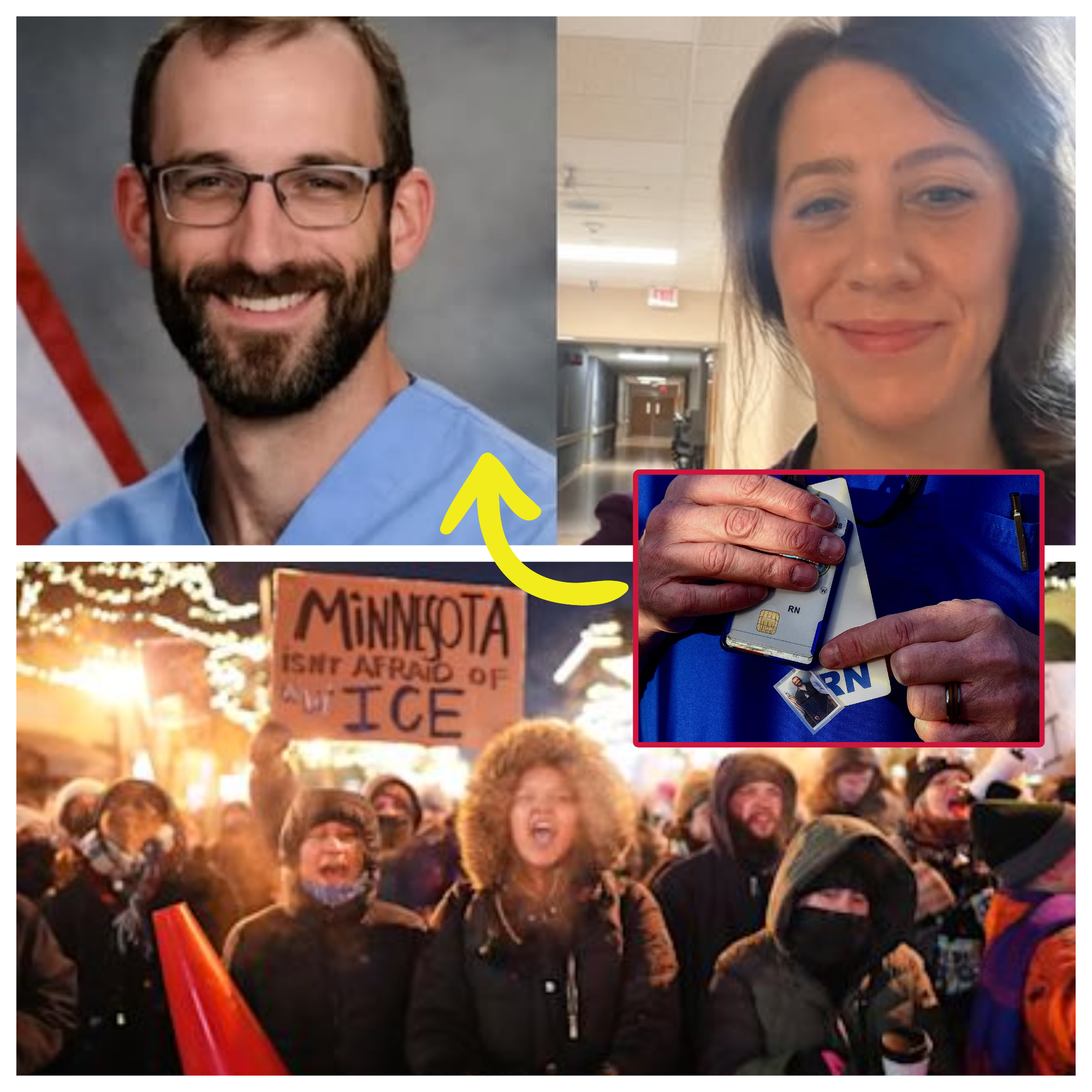
Jessica Hauser’s tribute to Alex Pretti, posted on Facebook and rapidly shared across Reddit’s r/nursing community and other platforms, has become one of the most emotional accounts emerging in the days following the 37-year-old ICU nurse’s death on January 24, 2026. As Pretti’s final nursing student during a four-month capstone preceptorship at the Minneapolis VA Hospital, Hauser provided an intimate glimpse into the man who trained her to handle the gravest medical crises while embodying unwavering kindness. Her words, written amid fresh grief, contrast sharply with the violent circumstances of his passing, painting a portrait of someone whose life revolved around healing and whose last recorded question reflected that core identity.
The preceptorship placed Hauser directly under Pretti’s guidance in the intensive care unit, where patients often teeter between life and death. Pretti taught her the precise, high-stakes skills required in such an environment: inserting and managing arterial and central lines, coordinating complex IV regimens packed with vasopressors, sedatives, and other critical infusions, and interpreting subtle changes in monitors that signal impending deterioration. These lessons demanded technical mastery, but Pretti infused them with something rarer—patience that never rushed, compassion that acknowledged the humanity in every patient, and a calm presence that steadied the entire team during emergencies. Hauser described this as a “steady light” he carried within, a quality that made even the most overwhelming shifts feel manageable.
Beyond clinical expertise, Pretti became a mentor and friend. The bond formed over shared long hours, discussions about patient care philosophy, and the quiet mutual respect that develops when two people confront suffering together daily. Hauser stood shoulder-to-shoulder with him, absorbing not just protocols but the mindset of a healer who viewed every intervention as an act of profound care. She emphasized that the techniques he taught were “intended to heal,” underscoring how Pretti approached nursing as a calling rather than merely a job. His composure in the face of crisis—whether a crashing patient or a grieving family—served as a model she now carries forward.
The tribute gains its deepest resonance when Hauser connects Pretti’s professional demeanor to his final moments, captured on widely circulated bystander video. During the confrontation with federal agents amid immigration enforcement actions in Minneapolis, Pretti intervened to protect a woman who had been pushed down. Amid pepper spray, physical struggle, and escalating tension, his signature calm endured. Hauser recognized it immediately: the familiar stillness, the composed posture that had anchored countless ICU shifts. His last words, directed at the woman on the ground—”Are you okay?”—came as no surprise to her. “Caring for people was at the core of who he was,” she wrote. “He was incapable of causing harm.” In that question, asked even as danger closed in, she saw the same instinct that drove him to comfort dying veterans, monitor fragile heartbeats, and mentor a new generation of nurses.
Pretti’s beliefs extended beyond the bedside. Hauser noted his strong support for the Second Amendment and constitutional rights, as well as his commitment to justice and peace. He spoke out when he saw division, advocating for connection through communication rather than conflict. This worldview aligned seamlessly with his nursing ethos: bridging gaps, protecting the vulnerable, and fostering understanding. His decision to witness and document federal actions in his community stemmed from the same sense of civic duty that led him to care for veterans at the VA—a group he viewed as particularly deserving of dignity and attention.
The nursing community has rallied around Hauser’s words. On Reddit, the post garnered hundreds of upvotes and comments from nurses who never met Pretti but felt the loss acutely. Many shared stories of similar mentors whose calm presence changed how they practiced. Professional organizations amplified the grief: the American Nurses Association expressed deep disturbance, condemning violence and calling for investigation. The Massachusetts Nurses Association condemned the “unwarranted and brutal killing,” highlighting Pretti’s role in spaces between life and death. Colleagues like Dr. Aasma Shaukat remembered his kindness and dedication to the most vulnerable, while vigils across Minnesota honored him as a caregiver whose legacy endures in every life he touched and every student he trained.
Hauser’s letter also serves as a reminder of the human cost in polarized times. Pretti died attempting to help another person—echoing the very actions he performed daily in the ICU. The irony is painful: a man who spent his career preserving life became a casualty in a moment of chaos. Yet Hauser insists his light persists. By sharing her experience, she ensures that Pretti is remembered not for controversy but for compassion. Future nurses will learn from the techniques he taught her, and through her words, from the character he modeled.
As memorials continue and calls for accountability grow, Jessica Hauser’s tribute stands as a powerful testament. It honors a mentor who lived healing fully, who taught with patience, and who—in his final breath—still reached out to ask if someone was okay. In doing so, she preserves the steady light he carried, ensuring it guides others long after his passing. Alex Pretti’s story, through her eyes, reminds the world that true caregivers never stop caring, even when the world stops for them.
News

Chi-l-l-ing Bali Case: Kidnapped Tourist Pleads For $10M—Days Later, The Sea Reveals A Gruesome Truth
The paradise of Bali, long celebrated as the “Island of the Gods” for its emerald rice terraces, turquoise waves, and spiritual serenity, became the backdrop for a nightmare of unimaginable brutality in early 2026. On February 27, fishermen and morning…

15-Year-Old Student D-i-es After Being Crushed Between Cars in School Parking Lot, Private School Denies Responsibility
The California school claims that the plaintiffs’ — including the teen boy’s — “own negligence” was the “sole” cause of his fatal injuries A California private school has responded to a lawsuit claiming it was responsible for the 2025 death of one of…

Mother and Two Children Found De@d One Day After Final Divorce Hearing, Sheriff Reveals
A mother and her two young children were found shot to death in their Arkansas home a day after attending her final divorce hearing — and now, authorities say she killed her two children before taking her own life. On…

Heartbreaking Tragedy: 12-Year-Old Boy D-i-es After Collapsing During Football Training
Adriel Enriquez’s death has been described as “every parent’s worst nightmare” as the tragedy has left his family, who are from San Bernardino, California, heartbroken View 2 Images Adriel Enriquez is remembered as ‘the sweetest, most gentle and shy soul’(Image:…

Latest Court Update: Former Pilot Greg Lynn Led Back to Cell After Bail Bid Rejected
The former pilot accused of killing camper Carol Clay and burning her remains in the High Country will remain in prison after being refused bail. Greg Lynn, 59, was granted a retrial in December over allegations he fatally shot Clay,…

A Baby’s First Day Ends in Tragedy: The Heartbreaking Story Behind the Shocking De@ths
A NEW mother was fatally shot in a hospital by her 19-year-old husband Sunday night, moments after they welcomed their child. The teenage father then took his own life. 3 The husband’s mother said the couple were having marital problemsCredit:…
End of content
No more pages to load