Survivor 50 has already delivered the kind of chaos longtime viewers expected, but not all chaos lands the same. In fact, the season has now produced two major twists that were both designed to shock the players — yet the fan response to them could not have been more different. One was blasted almost immediately. The other earned a much warmer reception. And that contrast is exactly why the show’s producers may need to pay closer attention to what viewers are actually reacting to.
According to the Cinemablend piece, both twists were introduced under the same broad logic: fans had voted before the season to inject more twists into the game, and host Jeff Probst explained that these shake-ups were part of that mandate. On the surface, that might make the wildly different reactions seem confusing. If viewers asked for more unpredictability, why did one twist trigger frustration while the other felt exciting? The answer, the article argues, is not about whether fans want surprises. It is about whether those surprises still leave room for actual gameplay.

The first twist, known as the “Blood Moon,” pushed the season into dangerous territory for many fans. Two players were randomly sent to exile island, while the remaining fifteen drew colors at random and were split into three groups of five. Each group competed separately for immunity, and then each group went to tribal council on its own, voting someone out within that tiny cluster. It was dramatic, yes, but also brutally dependent on luck. Players had almost no control over the alliances or enemies they were trapped with, and because the groups were so small, one bad draw could essentially end someone’s game before strategy even had a chance to matter.
That is where the bitterness really took hold. The article points to Genevieve as a clear example. She ended up in a five-person group that placed her biggest enemy beside multiple people aligned against her, leaving almost no realistic path to survive. The argument was simple but sharp: she was effectively doomed the moment she picked the wrong color. For many viewers, that crossed the line from “twist” into “lottery.” The problem was not merely that the game changed suddenly. It was that the twist appeared to strip players of agency so completely that social skill, alliance work, and strategic maneuvering became nearly irrelevant.
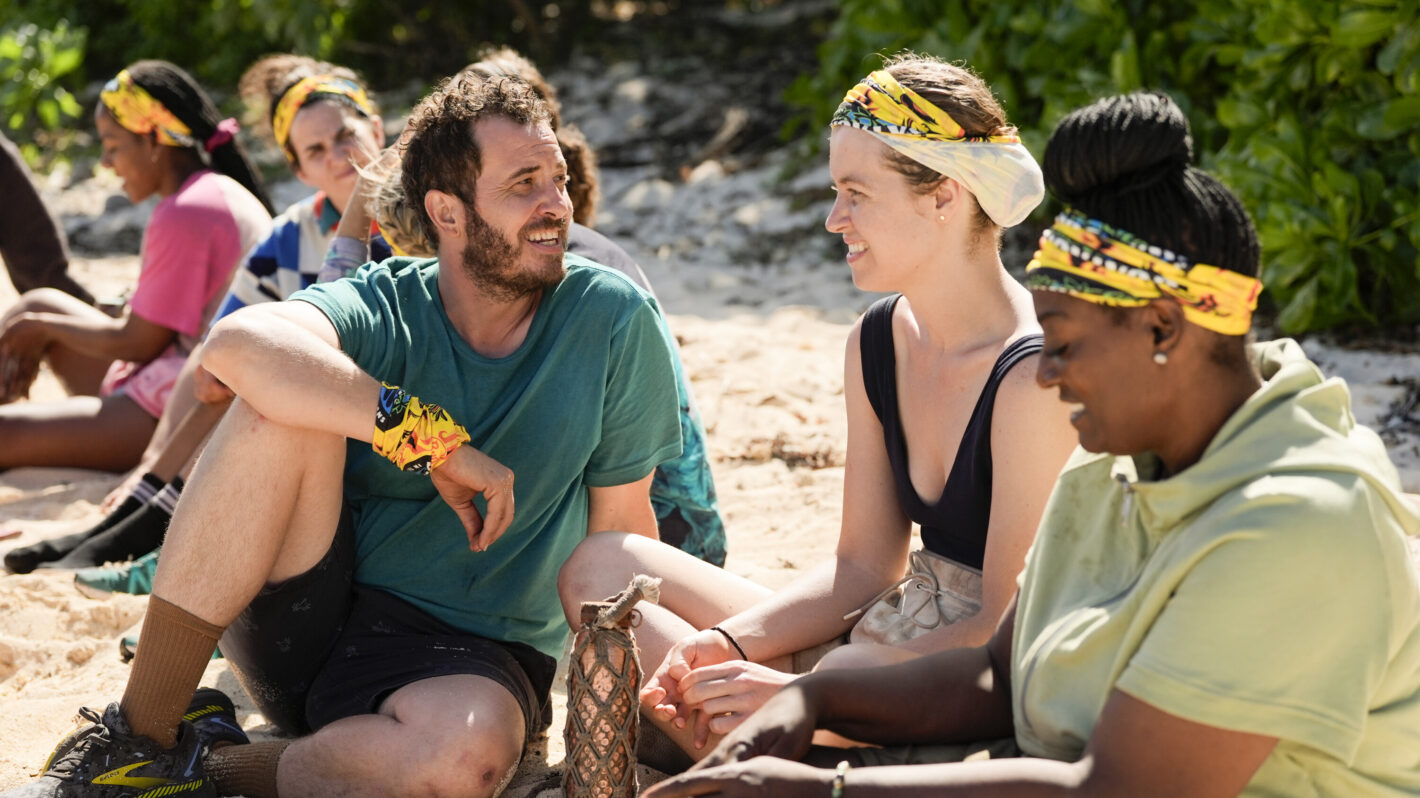
The second twist, by contrast, still shocked the players — but it did not suffocate the game in the same way. With thirteen contestants left, they were asked to divide themselves into six pairs, leaving one person alone. That solo player was sent to exile island before the challenge. The pairs competed for immunity, the winning duo became safe, and then everyone attended tribal council together. From there, each person had to vote for which duo should be eliminated. It was still unusual. It was still disruptive. But this time, the mechanics allowed people to think, negotiate, and try to work the numbers.
That distinction matters more than any flashy twist title ever could. The duos format gave players a chance to strategize their way through danger. They could choose their pairings, read the room, test loyalties, strike deals, and exploit cracks in the group. Even if the circumstances were strange, they were still playing Survivor. The game had been scrambled, not surrendered to randomness. That is why, even when beloved figures went home under this twist, the frustration did not hit the same way. Fans may not have liked the outcome, but they could at least see that the result came from decisions, relationships, and maneuvering rather than blind chance.
That is the emotional core of the argument. Viewers do not necessarily want a stale season where every week follows the same predictable pattern. The article explicitly says most fans are not asking for a twist-free game. They want innovation. They want volatility. They want the kind of episode that forces players to adapt under pressure. But they also want to believe that strong competitors still have a fighting chance to save themselves through skill. When twists become so random that somebody’s fate is sealed by a draw, the show stops feeling thrilling and starts feeling unfair.

The author reinforces that point by noting that favorite players were eliminated in both twists. Genevieve, Kamilla, and Colby were among those burned by the Blood Moon structure, while Coach and Chrissy went home during the duos twist. Yet the emotional response was not equal. The first set of exits still felt infuriating because some players appeared dead on arrival. The second set hurt less because, however unusual the format, those players still seemed to have a chance to fight for survival through normal Survivor tools: persuasion, social bonds, timing, and numbers.
That is the lesson buried beneath the backlash. A twist does not automatically fail because it is harsh. It fails when it removes too much choice. It fails when players are trapped in tiny, rigid groups that make meaningful strategy nearly impossible. It fails when the audience can watch someone’s game collapse and feel that nothing they did — or could have done — would have changed the outcome. On the other hand, a twist can still feel fresh, dangerous, and dramatic if it expands the strategic battlefield instead of shrinking it into a coin flip.

So the divide in fan reaction is not actually a contradiction at all. Fans did not reject one twist because they suddenly became anti-change, then embrace the other because they are impossible to please. They reacted differently because one twist treated Survivor like a strategy game under pressure, while the other reduced too much of it to random punishment. That difference may sound subtle on paper, but in practice it is the line between a twist that feels electrifying and one that feels rigged by circumstance.
And if Survivor wants to keep evolving without alienating the very people who still care enough to argue about every vote, that line matters. Fans can handle being shocked. They can even handle losing their favorites. What they struggle to accept is the feeling that a player’s fate was sealed before the conversation even began. In a game built on outwitting, outplaying, and outlasting, viewers will forgive almost anything — except the sense that the game stopped letting people do any of those things.
News
“POLICE HAVE JUST ANNOUNCED A MAJOR UPDATE…” — Everyone Following The Brighton Beach Mystery Has Been Left Stunned
Brighton beach LIVE: 3 women found dead in sea as police quash key theory about tragedy Emergency services swarmed Brighton Beach this morning after three Brighton beach: Police and rescue teams remain on scene Police have provided a major update…
BRIGHTON HASN’T FELT THIS UNSETTLING IN YEARS…” — Locals Say The Atmosphere Changed Completely After The Beach Discovery
Brighton beach LIVE: 3 women found dead in sea as police quash key theory about tragedy Emergency services swarmed Brighton Beach this morning after three Brighton beach: Police and rescue teams remain on scene Police have provided a major update…
“THEIR FAMILIES STILL DON’T HAVE ANSWERS…” — One Detail In The Brighton Beach Investigation Is Hitting People Hard
Bodies of three young women pulled from sea off Brighton PA Media Emergency services were at the scene in Brighton, East Sussex, for several hours The bodies of three young women have been recovered from the sea off the coast…
“NOBODY CAN EXPLAIN HOW ALL THREE ENDED UP IN THE WATER…” — Brighton Beach Case Leaves Social Media Searching For Answers
Brighton beach LIVE: 3 women found dead in sea as police quash key theory about tragedy Emergency services swarmed Brighton Beach this morning after three Brighton beach: Police and rescue teams remain on scene Police have provided a major update…
“THEY WERE FOUND FULLY CLOTHED…” — Ch!lling New Details About The Brighton Beach Trag3dy Are Leaving Britain Shaken
Brighton beach LIVE: 3 women found dead in sea as police quash key theory about tragedy Emergency services swarmed Brighton Beach this morning after three Brighton beach: Police and rescue teams remain on scene Police have provided a major update…
“IS THIS THE END?” — I’M A CELEBRIT Facing Cancellation And The Real Reason Has Left Viewers Speechless
I’m A Celebrity… Get Me Out Of Here! future in doubt ahead of 2027 schedule announcement Channel Ten‘s I’m A Celebrity… Get Me Out Of Here! Australia faces an uncertain future. The reality TV show is said to have been cancelled after the 2026…
End of content
No more pages to load