Public media organizations across the United States are rapidly preparing for an uncertain future as federal support continues to erode, and few figures have been more vocal in their defense of public broadcasting than Stephen Colbert. Speaking at a recent gala in New York, Colbert expressed deep concern about the long-term consequences of government funding cuts and emphasized the critical role public media plays in communities nationwide.

In the wake of the Trump administration’s decision to slash more than $1.1 billion from public broadcasting budgets, organizations such as New York Public Radio have been forced to rethink their financial models. With federal assistance rapidly disappearing, these institutions are increasingly turning to private donors, philanthropists, and alternative revenue streams to survive.
On Tuesday night, New York Public Radio raised $1.7 million at its Stand With Public Media gala, an event designed not only to generate funds but also to spotlight the importance of free, independent journalism. The evening honored Stephen Colbert and his wife, Evelyn McGee Colbert, recognizing their long-standing advocacy for free speech and public media. The couple, both self-described public radio loyalists, have consistently spoken out in support of independent, non-commercial journalism.
Speaking to Variety during the event, Colbert shared his hope that the rollback of federal funding would not become a permanent fixture of American governance. He acknowledged that the future remains unclear, but stressed that public demand for trustworthy media has not diminished. According to Colbert, many Americans still deeply value what public media provides, especially in regions where traditional local news outlets have disappeared.
Colbert pointed out that in many parts of the country, public radio has effectively become the only source of local journalism. As local newspapers struggle or shut down entirely, public radio stations often fill the void by offering community-focused reporting, emergency information, and a sense of connection. He emphasized that these services are not luxuries but necessities, especially for communities that would otherwise be left in the dark.
Despite Colbert’s optimism, leaders within public media organizations are preparing for the possibility that federal funding may never return. LaFontaine Oliver, president and CEO of New York Public Radio, explained that the organization has no choice but to plan for a future without government support. According to Oliver, the current moment demands reinvention rather than reliance on past funding structures.

Oliver said public media institutions must seek new revenue pathways, strengthen their relationships with audiences, and connect with communities in more innovative ways. This includes expanding outreach to institutional funders and philanthropists, as well as exploring ways to responsibly monetize content. While these steps are challenging, Oliver believes that the spirit of reinvention will ultimately strengthen public media, even if some level of federal funding is restored later on.
In certain regions, the consequences of funding cuts are especially severe. In Alaska, for example, local leaders have described the loss of public media funding as a matter of life and death. In dozens of remote communities across the state, public radio is often the only reliable source of emergency alerts, weather updates, and vital safety information. With limited road access and unreliable broadband internet, these stations play a crucial role in daily survival.
Station owners in Alaska have warned that they could lose anywhere from 40% to 90% of their funding as a result of federal cuts. Without alternative revenue sources, some stations may be forced to shut down entirely. The prospect of going dark raises serious concerns about public safety, particularly during severe weather events or other emergencies where timely communication can save lives.
At the same time, public trust in both national and local news outlets continues to decline. Surveys, however, consistently show that Americans tend to view public media as more credible and reliable than for-profit news organizations. This perception has only strengthened as audiences grow increasingly skeptical of commercial media driven by advertising and corporate interests.
Evelyn McGee Colbert spoke to this issue during the gala, explaining that one of the most valuable aspects of public media is its commitment to factual, unbiased reporting. She noted that finding truly independent news sources has become increasingly difficult, making public media all the more important in the current media landscape.

Both Colbert and his wife said they rely heavily on WNYC for their news. Colbert explained that because public radio is commercial-free, it allows for deeper, more nuanced storytelling. Rather than compressing complex issues into short segments, public radio can spend 20 or 30 minutes exploring a single story in depth, offering context and analysis that are often missing from cable news coverage.
Colbert also joked that one of the practical benefits of radio is that it allows him to multitask. Unlike television, radio does not demand visual attention, making it easy to listen while cooking or going about daily routines. This accessibility, he suggested, is part of what makes public radio such a powerful and enduring medium.
Colbert’s outspoken support for independent journalism comes at a complicated time in his own career. CBS recently announced the sudden cancellation of The Late Show with Stephen Colbert, labeling the move as a financial decision. However, the explanation has been met with skepticism from various media organizations and industry insiders.
Groups such as the Writers Guild of America have questioned whether the cancellation was connected to Colbert’s on-air criticism of Paramount and its $16 million settlement involving 60 Minutes and Donald Trump. The timing of the decision raised eyebrows, particularly given Colbert’s sharp and consistent commentary on political issues.
Earlier this month, Colbert addressed the speculation directly, saying it was “a reasonable thing to think” that politics may have played a role in the show’s cancellation. At the same time, he acknowledged that dwelling on such speculation was not productive for him personally. His comments reflected both awareness of the broader media climate and a reluctance to be consumed by it.
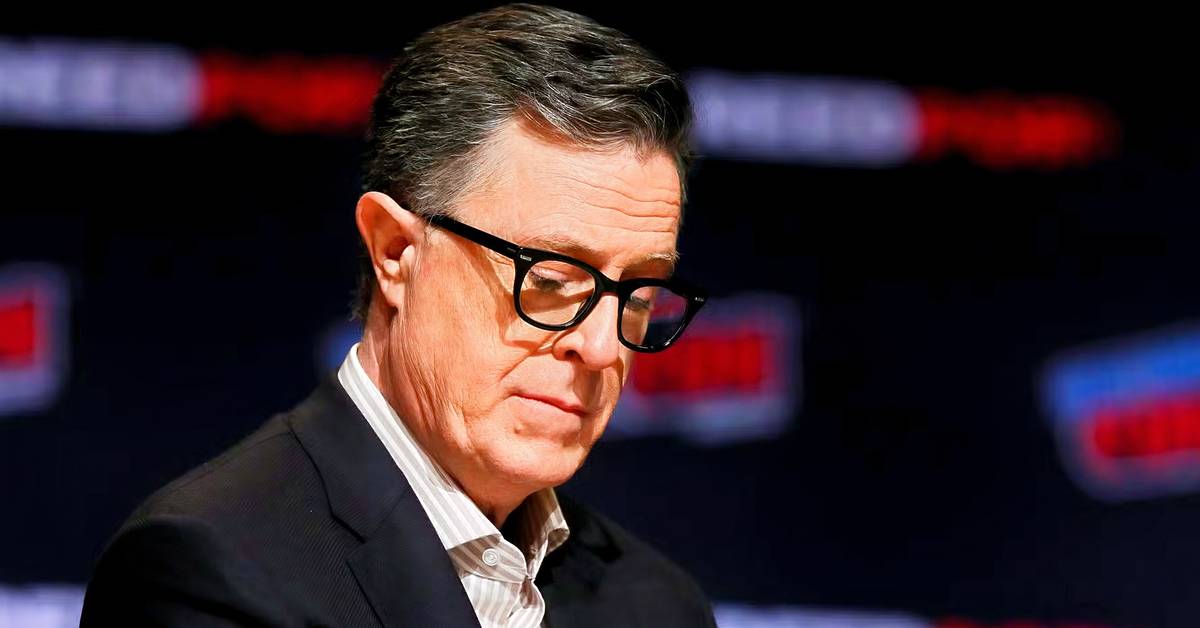
As public media braces for continued uncertainty, Colbert’s remarks at the New York Public Radio gala underscored a broader concern about the future of independent journalism in the United States. While funding models may change, he and others argue that the mission of public media remains essential. In communities large and small, public radio and television continue to serve as trusted sources of information, connection, and accountability.
Whether federal support eventually returns or not, leaders within public media agree on one thing: adaptation is no longer optional. As Colbert and McGee Colbert emphasized, the value of public media lies not just in its programming, but in its commitment to truth, depth, and service — qualities that many Americans still rely on in an increasingly fragmented media environment